Orchestrate Disaster Recovery Workflows
Resolve sequences failover and failback across compute, network, storage, and DNS, with the approvals and evidence your auditors and executives expect.
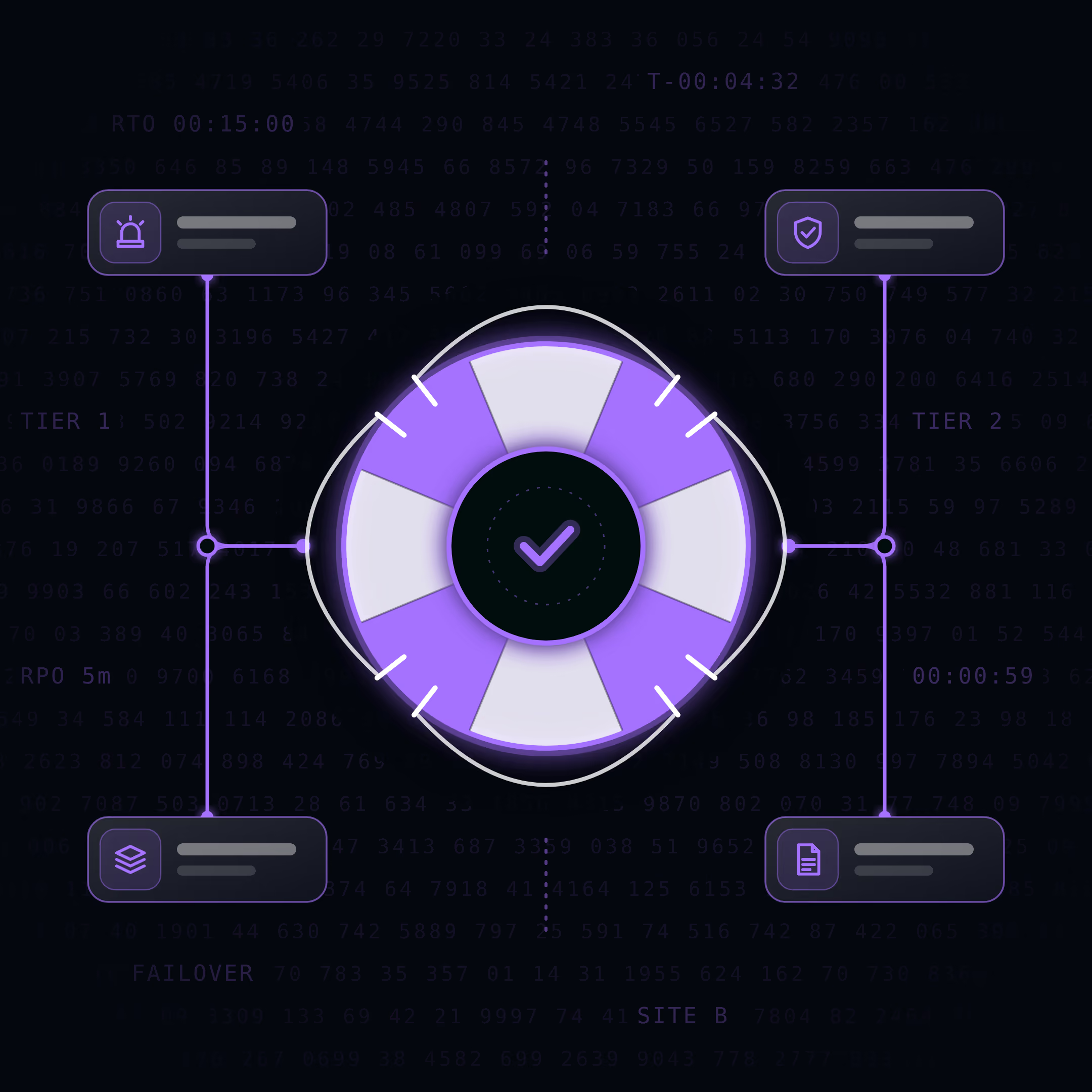

Disaster Recovery Plans Break at the Handoffs Between Teams.
Tired of a disaster recovery plan that lives in a document nobody has run end to end since the last audit?
When the primary site goes dark at 3 a.m., your storage, VMware, network, DNS, and application teams wait on each other step by step while the recovery time objective ticks down in minutes.
Resolve runs the plan the moment you declare the event. It sequences every step across every team's tools, verifies each tier before the next one starts, and records the evidence as it goes, so recovery lands inside the objective you committed to.

Fail Over in Sequence, Every Time
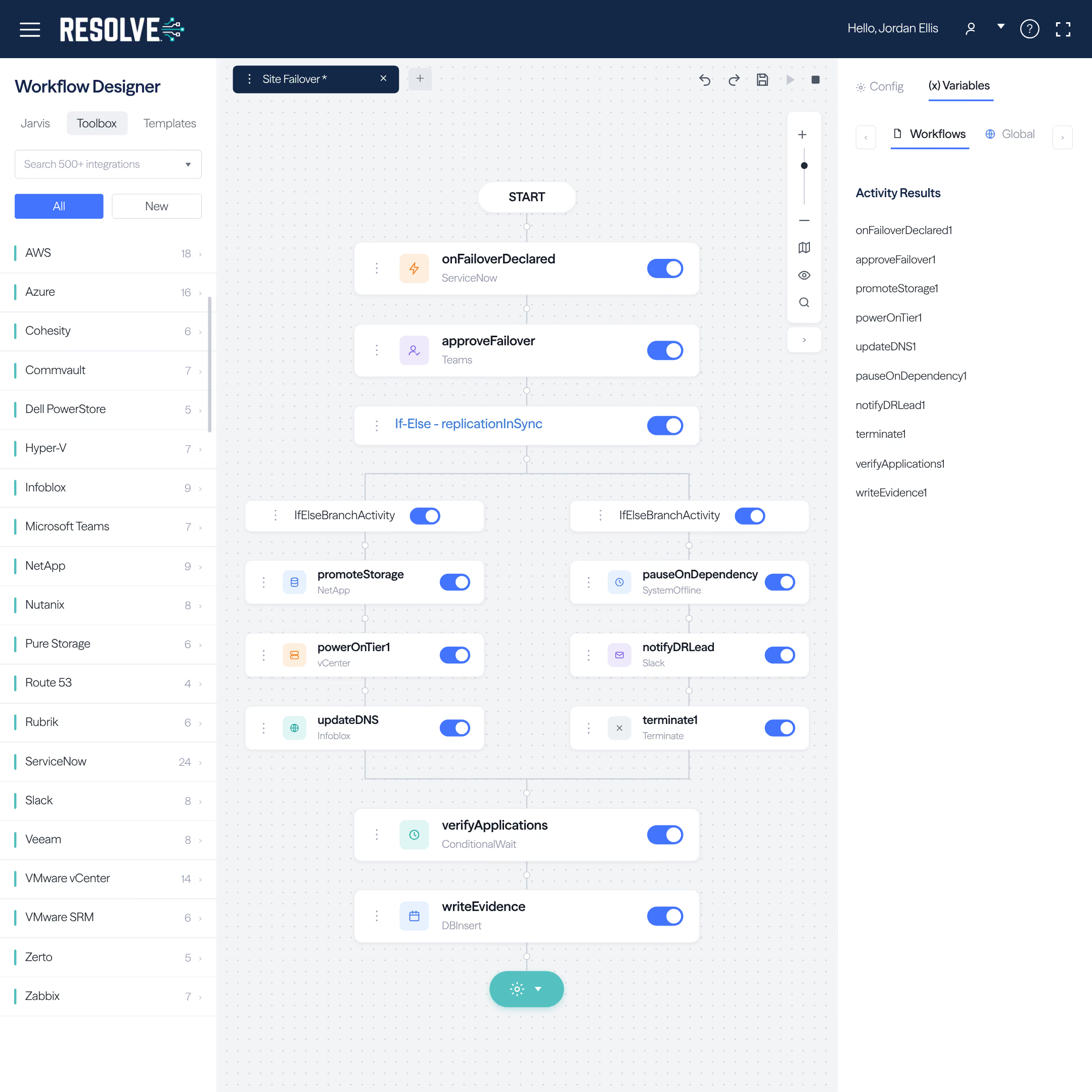
Every recovery step runs in sequence from one workflow, so your recovery time matches the objective on paper.

Prove Recovery on Demand
Scheduled DR tests run the same workflow as a live event and produce audit-ready evidence every time.

Resilience as a Strategic Function
With failover running on its own, your engineers spend their week hardening architecture and expanding recovery coverage.
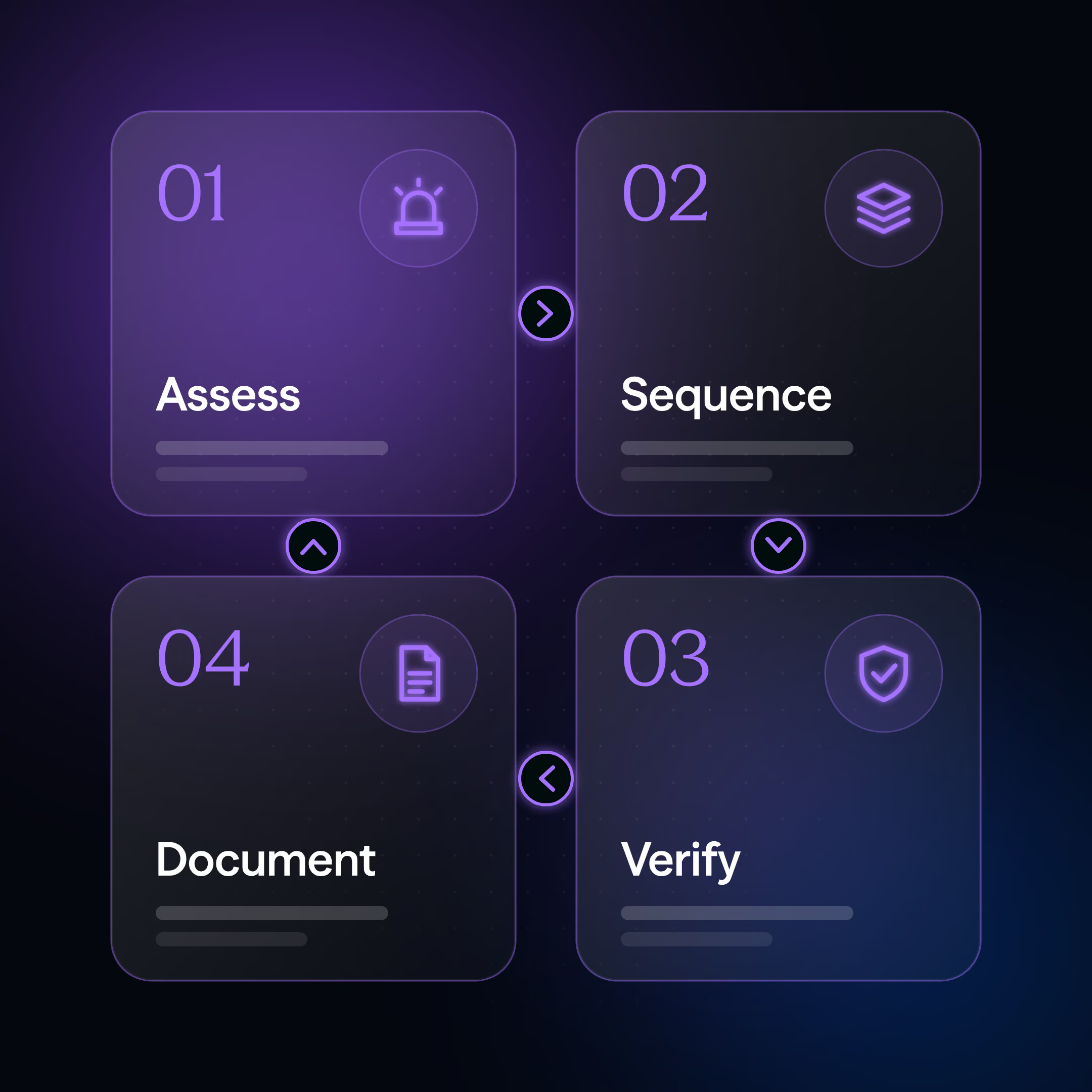
Disaster Recovery Orchestration That Verifies Every Tier Before the Next
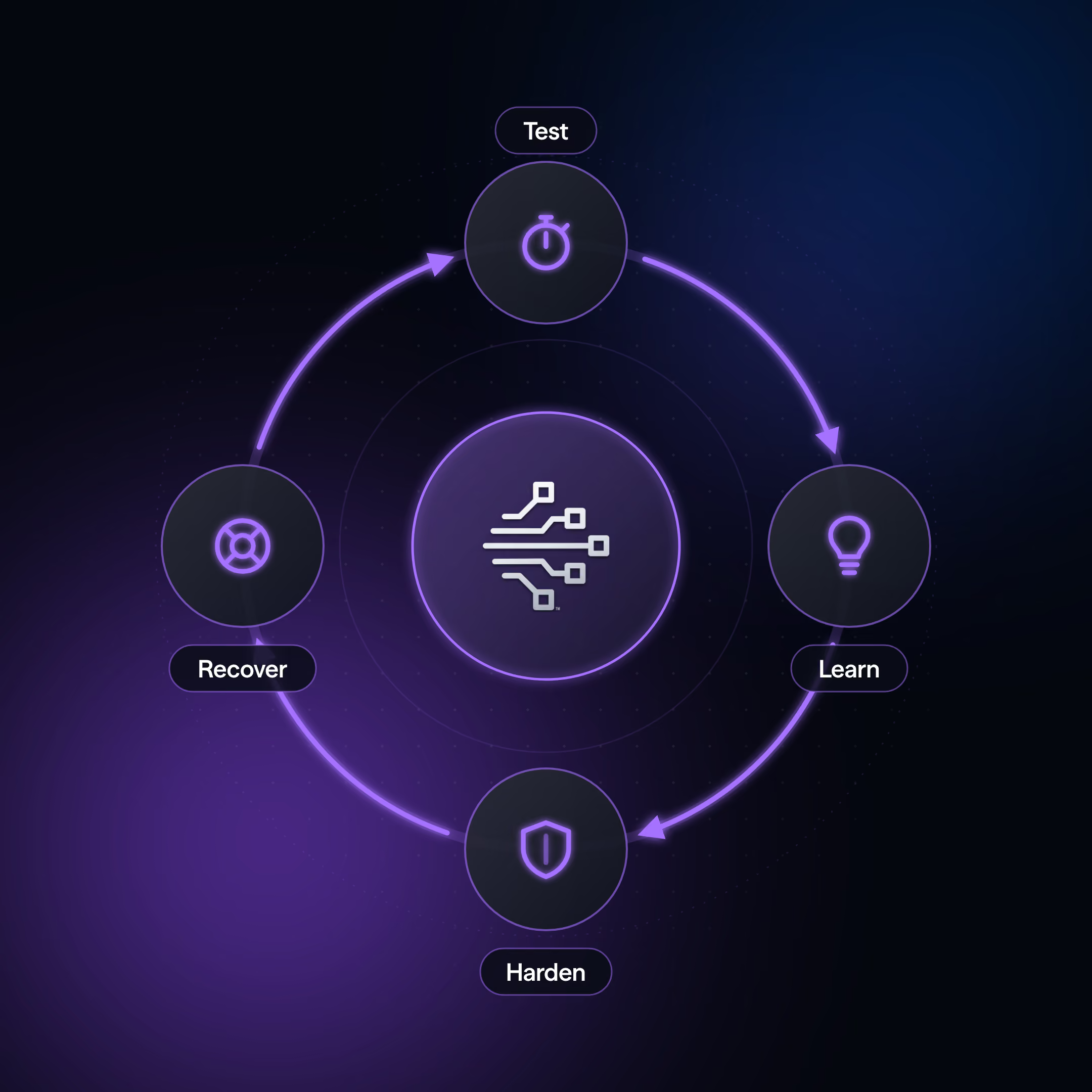
The moment you declare an event or schedule a test, Resolve runs a four-step loop from declaration to verified recovery.
1. Assesses the event, confirms the failure scope, and routes the failover decision to the right approver with live system status attached.
2. Sequences recovery across storage replication, compute, network, and DNS, following your dependency map tier by tier.
3. Verifies each tier with health and application checks before the next tier starts, and pauses for a decision if a check fails.
4. Documents every step with timestamps and evidence, updates the incident and change records, and stages failback.
Transform How Your Team Recovers From a Disaster
Resolve executes every recovery step through the infrastructure tools your teams already trust, so the whole DR plan runs as one governed workflow.
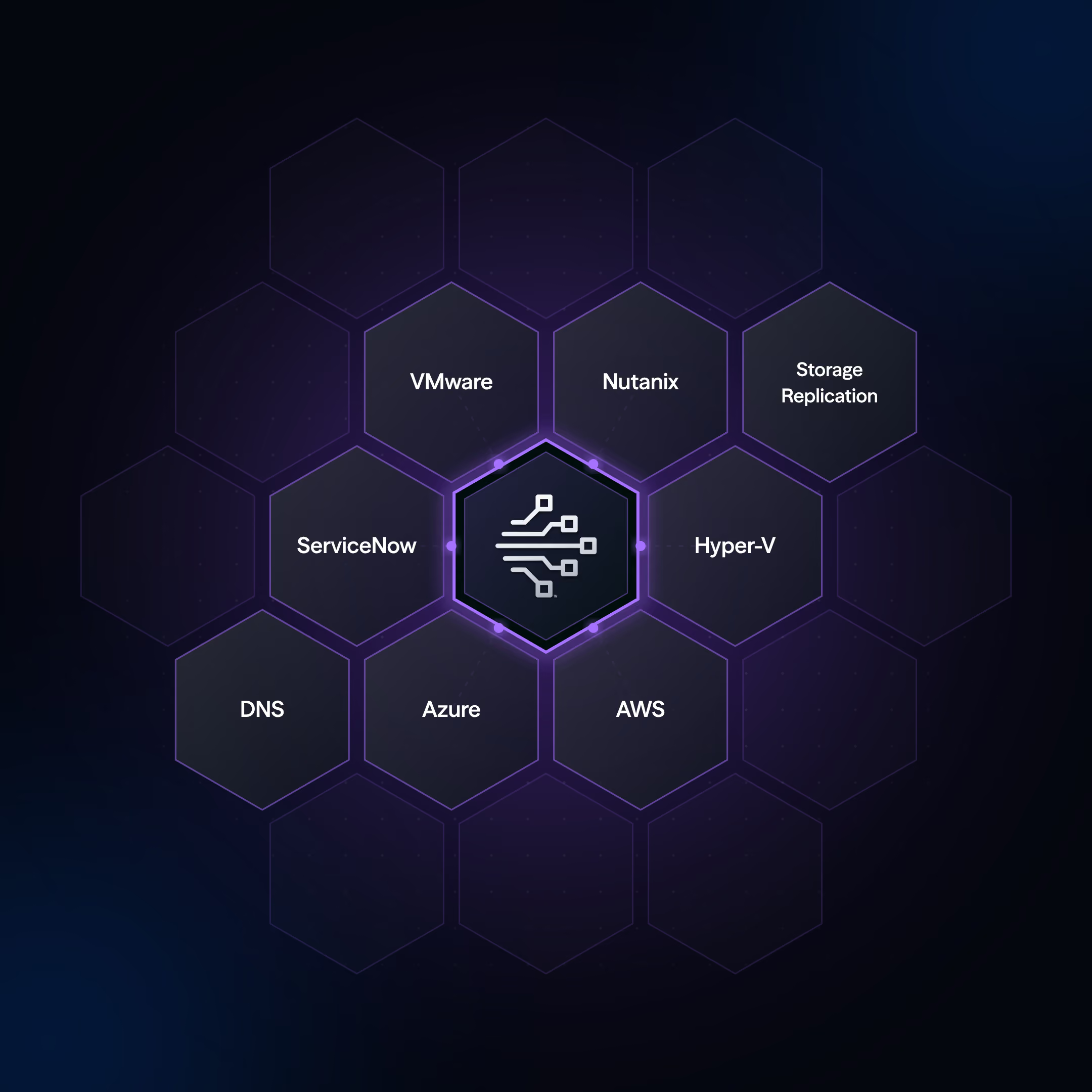
Disaster Recovery Orchestration Built on Your Existing Stack. Runs across VMware, Nutanix, Hyper-V, and public cloud, plus your storage replication, network, DNS, and ITSM tools.
Dependency-Aware Sequencing. Recovery follows your application dependency map, tier by tier.
Verified Recovery. Every tier passes health and application checks before the next one starts.
Scheduled Disaster Recovery Testing. Tests run the live workflow on a schedule and produce evidence for every control.
Low-Code That Runs Your Code. Build visually and drop in your own PowerShell, Python, Ansible, or vendor API calls anywhere in the flow.
Prebuilt Recovery Workflows. Start from ready-made failover, failback, and disaster recovery test workflows.
Cross-Domain Disaster Recovery
Disaster recovery orchestration runs on Resolve's Agentic Resolution Fabric, so every failover becomes one governed workflow spanning every team's tools.
Approvals, role-based permissions, and a timestamped audit trail ride on every recovery, so each action traces back to the decision that authorized it.
500+ native integrations across hypervisors, cloud, storage, network, DNS, and ITSM, and your existing scripts and runbooks plug straight in.
Test results and failed checks surface automatically, gaps in recovery coverage get flagged, and every test makes the next recovery faster.
What Changes When Every Disaster Recovery Runs Through Resolve
Every failover and disaster recovery test follows the same governed workflow, so recovery runs predictably and proof of readiness is always on hand.
Every tier comes back in sequence, so recovery stays inside the objective you committed to.
Scheduled tests produce timestamped evidence for every control and every auditor.
One workflow coordinates storage, compute, network, and DNS across every team.
The workflow that runs at 3 a.m. is the same one that passed your last scheduled test.
Every test surfaces gaps, so coverage expands with each run.