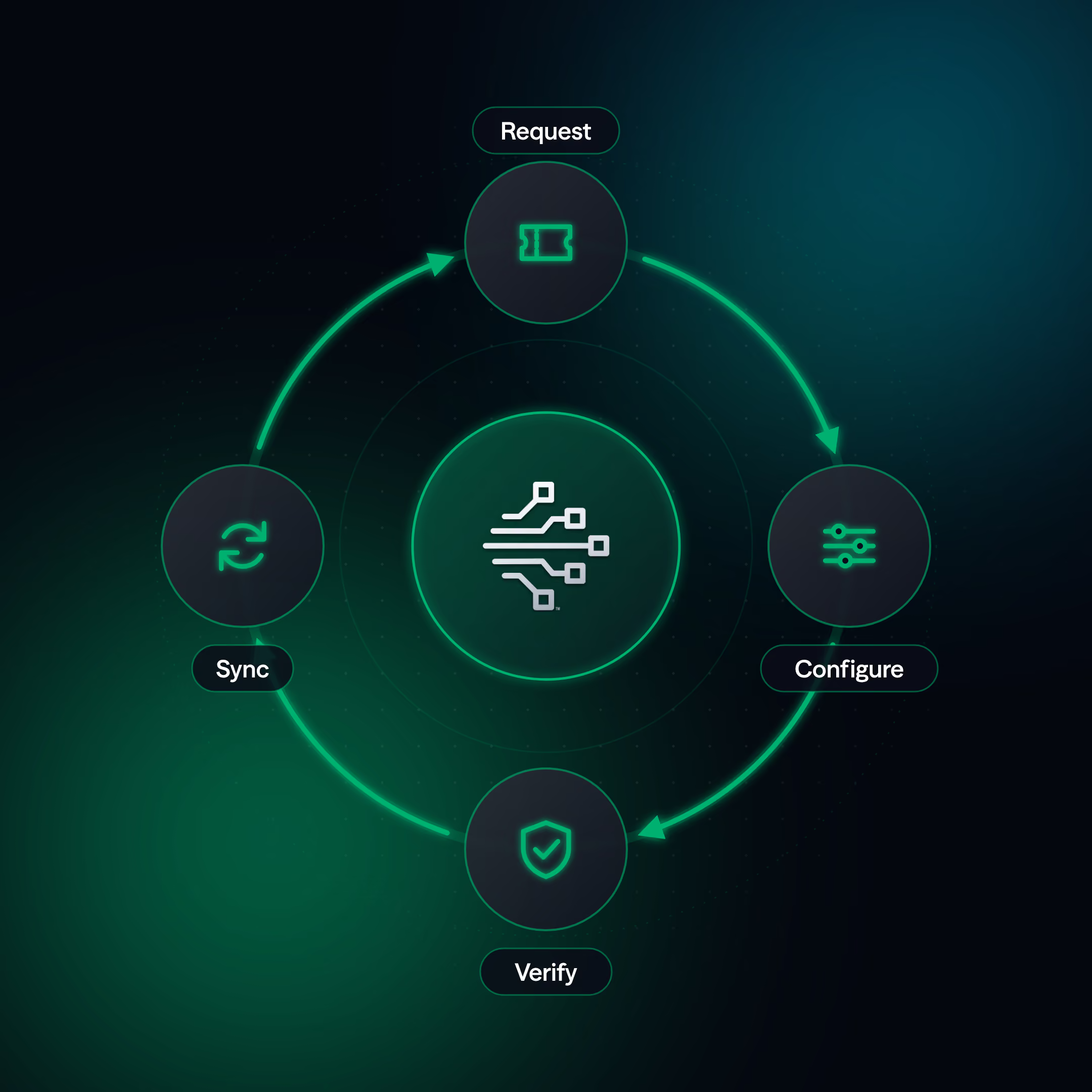
Instantly Provision Network Resources
Resolve takes every VLAN, IP, and DNS request from ITSM ticket to verified configuration and updates your IPAM and source of truth on its own.

Network Provisioning Requests Sit in the Longest Queues.
Tired of a simple VLAN and three IP addresses taking longer to deliver than the application that needs them?
Your requests hop from the service desk to the network team to the DDI admin, and every stop means another spreadsheet that disagrees with the last one, for every new app, branch, and data center rack.
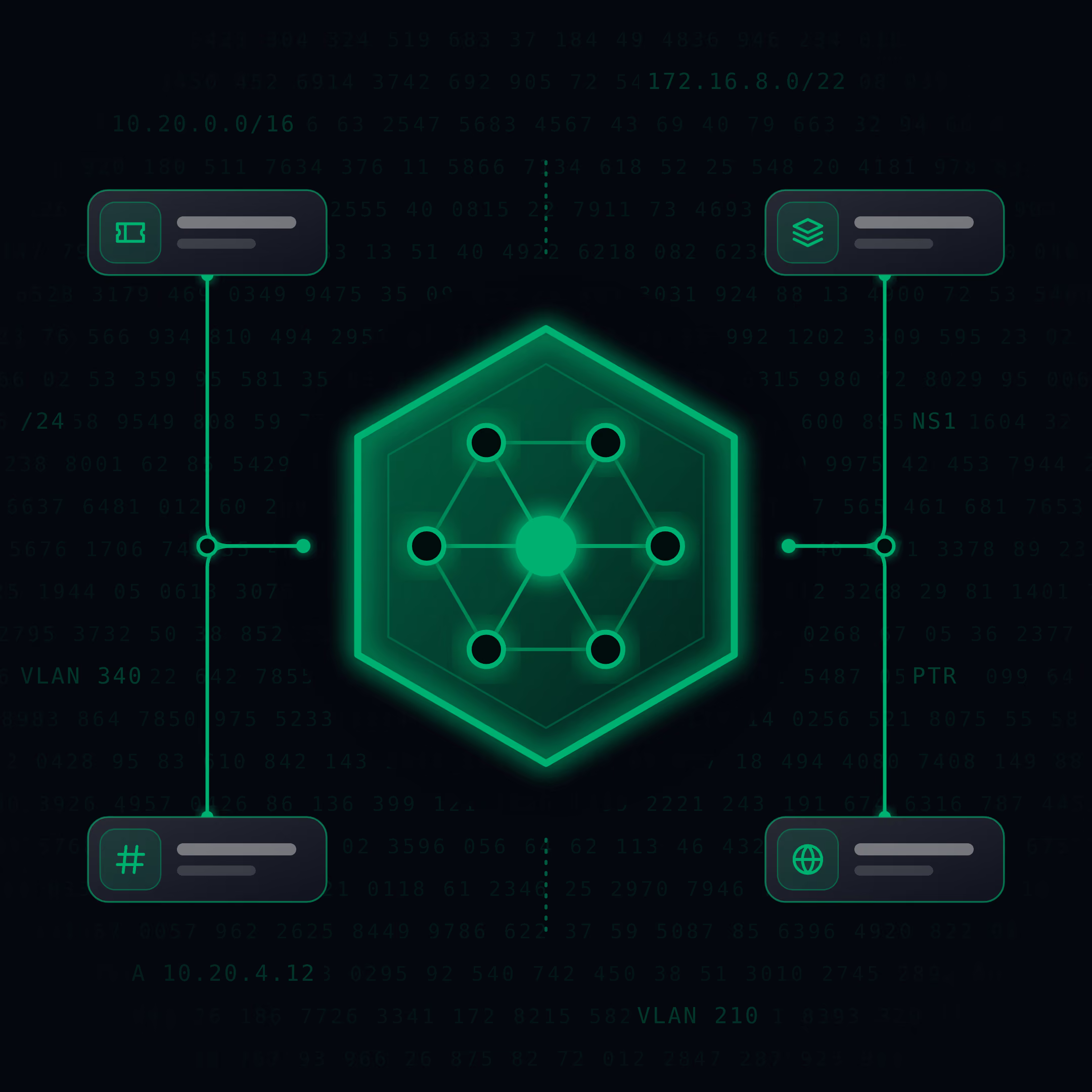
Resolve fulfills the request the moment it lands. It reserves the addresses in IPAM, configures the VLAN on the right switches, creates the DNS records, and writes every change back to your source of truth, so new services get connectivity on day one and your records stay accurate.

Fulfill Network Requests on Day One
Reservation, configuration, and registration run in one workflow, so new services get connectivity at the pace of the request.

One Source of Truth, Always Current
Every address, VLAN, and record writes back to IPAM, NetBox, and the CMDB, so your data matches your network.

Network Architecture Gets Its Week Back
With routine requests running on their own, your engineers spend their week on fabric design, segmentation, and the projects that move the business forward.
Network Provisioning Automation That Checks the Source of Truth First
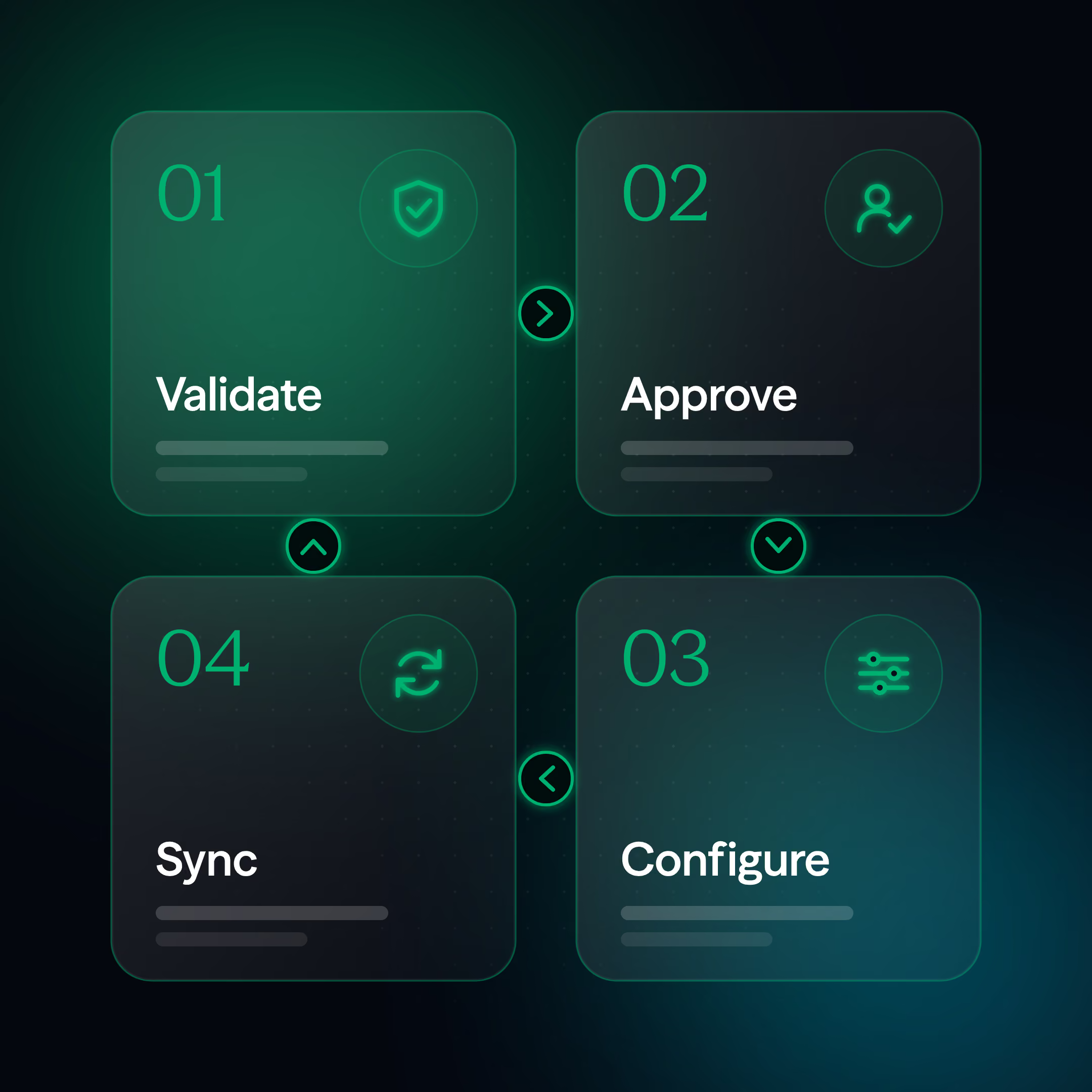
The moment a network request lands in ServiceNow, Jira, the portal, or chat, Resolve runs a four-step loop from ticket to verified configuration.
1. Validates the request against IPAM, your source of truth, and naming policy, catching overlaps and conflicts before approval.
2. Routes approval to the right owner with the proposed addresses, VLAN, and affected devices attached.
3. Configures the change across switches, IPAM, and DNS, then verifies reachability and rolls back automatically if a check fails.
4. Closes the change record, writes every change back to IPAM, NetBox, and the CMDB, and notifies the requester.
Transform How Your Network Team Fulfills Provisioining Requests
Resolve fulfills every request through the IPAM, DNS, and network tools your team already trusts, with no swivel-chairing between the ticket and three consoles.
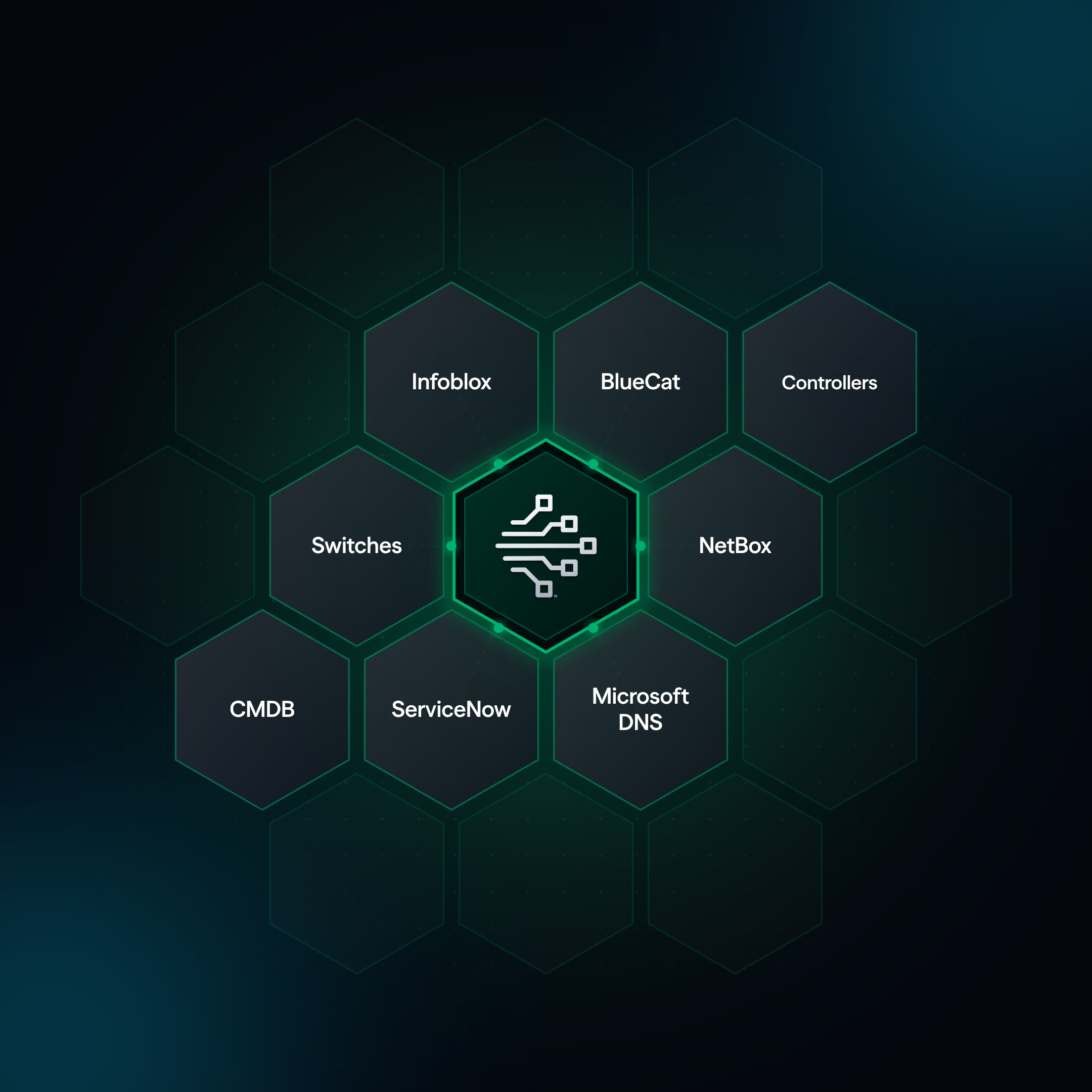
Network Provisioning Automation Built on Your Existing Stack. Runs across Infoblox, BlueCat, NetBox, and Microsoft DNS, plus your switches, controllers, and ITSM.
Source-of-Truth Sync. Every change writes back to IPAM, NetBox, and the CMDB the moment it lands.
Conflict Detection. Overlapping subnets, duplicate records, and VLAN collisions surface before approval.
Verified Execution and Rollback. Every change is tested for reachability, and failed checks roll back automatically.
Low-Code That Runs Your Code. Build visually and drop in your own Python, Ansible, or vendor API calls anywhere in the flow.
Prebuilt Network Workflows. Start from ready-made VLAN, IP reservation, and DNS record workflows.
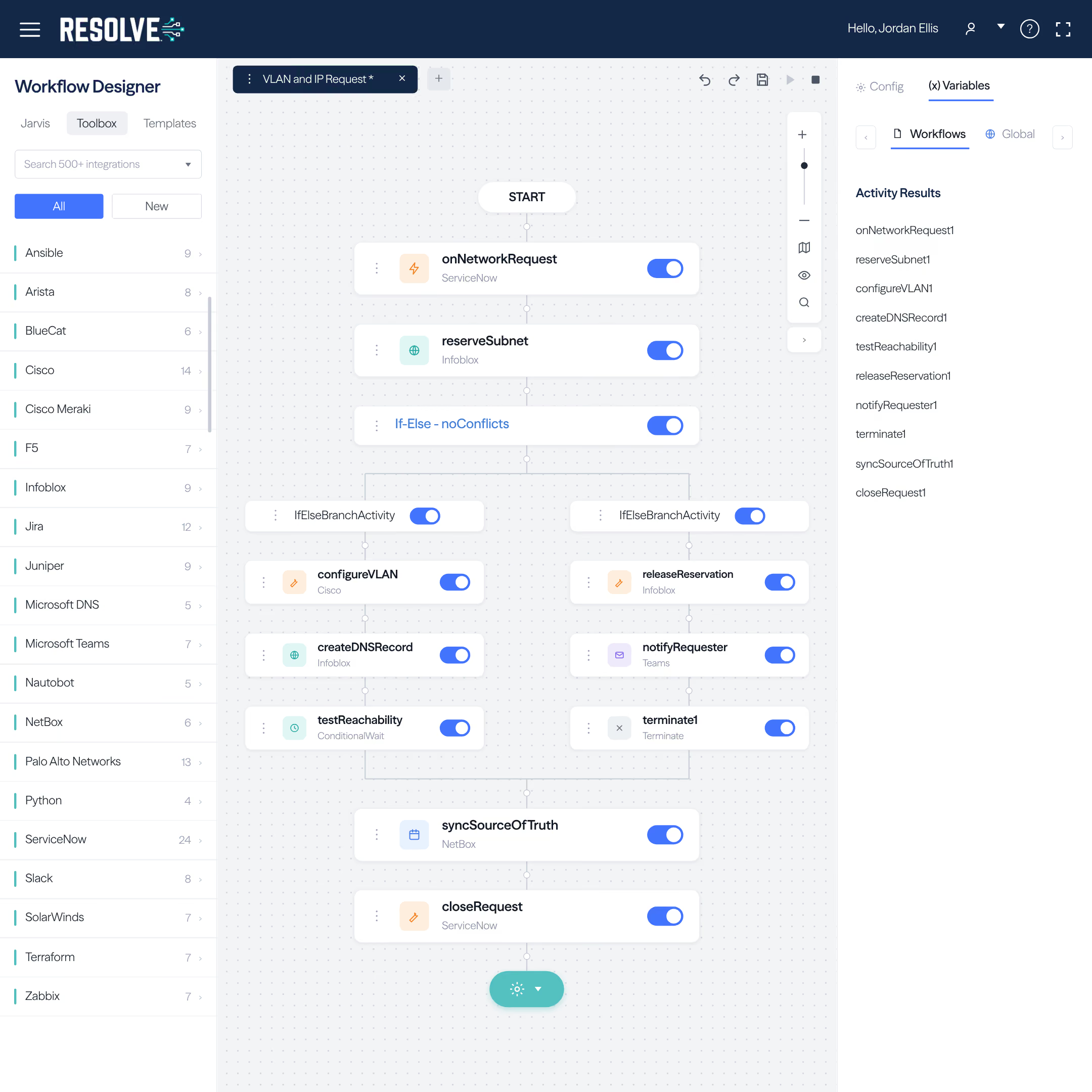
Built for Network Operations, Connected to Everything Else
Network provisioning automation runs on Resolve's Agentic Resolution Fabric, so every VLAN, IP, and DNS change becomes one governed step in a larger infrastructure workflow.
Approvals, role-based permissions, and a complete audit trail ride on every change, with each address mapped to its ticket and approver.
500+ native integrations across IPAM, DNS, switches, controllers, ITSM, and CMDB, and your existing scripts and playbooks plug straight in.
Drift between the network and the source of truth surfaces automatically, stale reservations get flagged for reclamation, and every repeat request runs faster.
What Changes When Every Network Provisioning Request Runs Through Resolve
Every VLAN, IP, and DNS request follows the same governed path, so new services get connectivity faster and your source of truth stays accurate.
VLANs, addresses, and DNS records are configured and verified in one workflow.
Every change writes back to IPAM, NetBox, and the CMDB the moment it lands.
Overlaps and collisions surface before approval, well ahead of production.
Every switch, subnet, and record follows the same naming and policy standard.
Stale reservations get flagged and released, so capacity returns to the pool.