Celfocus Cuts Vodafone’s Detection Time 90% and RAN Configuration to Under 3 Minutes with Resolve

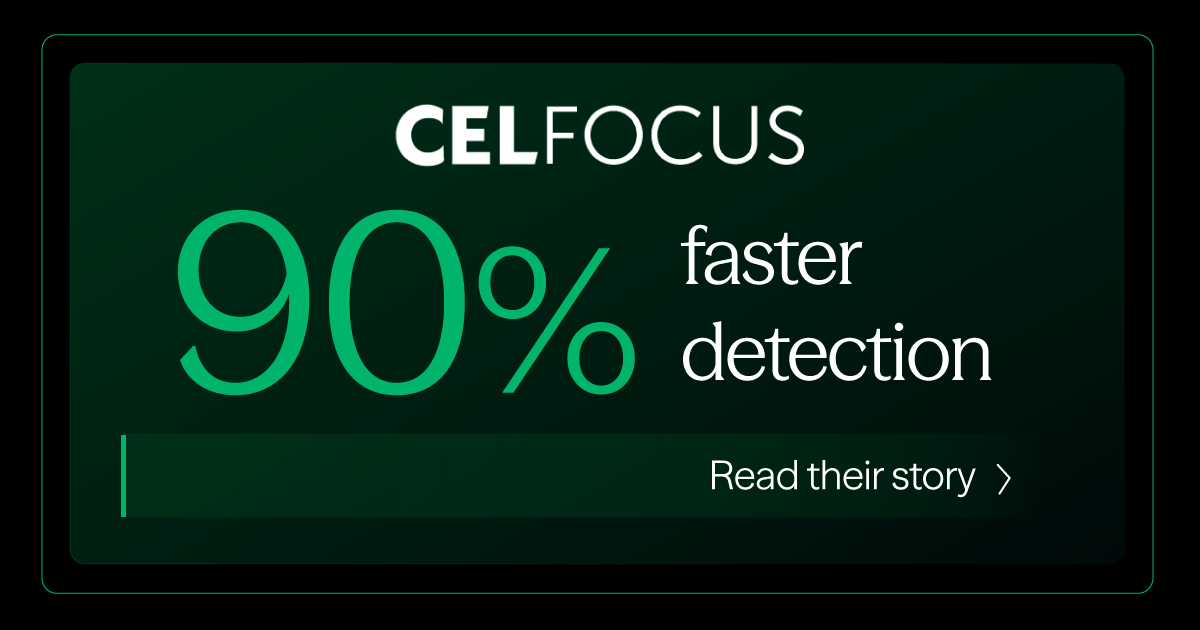
Celfocus used Resolve to automate Vodafone’s first-line network operations across 13 European markets, cutting detection time by 90% and reducing RAN configuration to under three minutes. The program also reduced manual first-line effort by 80% and achieved 82% zero-touch automation.
Organization Profile
Partner: Celfocus
Role: Systems integrator and digital transformation partner
Industry: Telecommunications
Users Supported: 13 European markets from NOCs in Portugal and Romania
Region: Europe
Automating First-Line Network Operations for Vodafone
For a global telecommunications provider, network operations depend on speed, consistency, and the ability to coordinate action across a vast collection of systems. And yet, many first-line activities still required engineers to move manually from alarm detection through investigation, ticketing, remediation, and reporting.
Vodafone set out to change that model through its Cognitive Intelligence Automation Solution (CIAS), as part of a broader transformation of its Global Network Operations Centre. The program established a three-year goal: reduce the effort allocated to first-line support activities by 80% through automation.
Celfocus partnered with Vodafone to design and deliver the program across European operations. Resolve entered the picture by becoming the orchestration and automation layer, receiving incidents identified by analytics and AI, then coordinating the actions required to carry each incident toward resolution.
"We used Resolve in a much more ambitious way than it had been used before, at least from the examples we had seen," said Bruno Santos, Executive Director at Celfocus.
The scale of that ambition mattered a lot. The solution had to support multiple operators and geographies, integrate with local ticketing, monitoring, and network systems, and accommodate operational processes that were not nearly as standardized as they first appeared.
The Network Operations Processes Celfocus Automated First
Celfocus did not begin by trying to automate every network event at once. The team analyzed historical operational data to identify the use cases most likely to deliver an immediate return on investment.
The selection process focused on where support teams were largest, which tickets occurred most frequently, and which incident journeys could be automated with the least initial complexity. Early use cases included 4G and 5G cells going down, power failures at cell sites, and flapping alarms.
Portugal and Romania were the initial markets because Vodafone’s regional network operations centers were based there. From that foundation, the team prioritized additional geographies according to operating scale and potential savings, including the Netherlands and Germany.
This value-first approach gave Celfocus a practical way to prove the model, learn from live operational journeys, and expand automation where it could produce the greatest benefit.
Resolve Turned Network Events into End-to-End Remediation
The incident journey was more complex than a simple trigger-and-response sequence. Celfocus initially expected Resolve to receive an event, create a ticket, act on the network, and close the process. In practice, remediation required preparation, validation across other systems, conditional paths, and sometimes a pause for manual inspection before automation could continue.
Some remediation journeys included more than 10 integrations and multiple decision branches. Celfocus worked alongside Resolve engineers to extend the platform’s use from immediate event automation into long-running operational workflows. These workflows could pause, resume, and incorporate human input when surrounding systems were not yet ready for full integration.
This flexibility helped the initiative move toward closed-loop automation without pretending every environment was already capable of zero-touch execution. Resolve could automate the available steps, preserve the broader workflow, and bring an engineer into the process only when an exception required it.
Scaling Across Systems and Geographies
As local operators joined the central platform, the number of integrations and automated journeys continued to grow. The underlying automation layer needed to scale horizontally while connecting to different ticketing systems, monitoring tools, and network technologies.
"We found Resolve very easy to scale horizontally," Santos added.
Resolve’s prebuilt connectors accelerated integration with existing systems, while its extensibility helped Celfocus create new connectors as the program expanded. Rather than replacing the operational ecosystem around it, Resolve coordinated actions across that ecosystem.
The expansion also exposed an important organizational challenge. A power fault or cell outage might appear technically similar in two countries, but local support teams often resolved it through different processes. Celfocus had expected high workflow reuse across geographies; instead, each operator frequently required substantial adaptation.
To manage that variation, Celfocus built an open architecture and reusable templates on top of Resolve. This made it easier to preserve common components while adapting each journey to local operational realities.
Measurable Progress Toward Zero-Touch Operations
By connecting detection, decision-making, orchestration, remediation, and reporting into coordinated incident journeys, Celfocus delivered measurable improvements across Vodafone’s network operations.
Detection time improved by 90%, allowing operations teams to identify network issues significantly faster. RAN configuration processes that previously required more manual intervention could be completed in under three minutes, demonstrating how orchestration could accelerate action as well as detection.
The program also achieved the confirmed 80% reduction in manual first-line effort for support teams in operations adopting the solution.
Celfocus’s published program results include:
- 90% improvement in mean time to detect
- RAN configuration completed in under three minutes
- 82% zero-touch automation
- 80% reduction in manual first-line effort
- 70% event noise reduction
- Two million events processed per day
Together, these outcomes show how automation improved both operational capacity and response performance. Event noise was reduced before reaching engineers, network issues were detected faster, configuration work could be completed in minutes, and more incident journeys progressed without manual intervention.
Giving Operations Teams Ownership
A central design principle was that Vodafone would be able to take ownership of the solution after the initial three-year program. The platform could not remain dependent on Celfocus professional services for every new workflow or enhancement.
Celfocus supported that transition by building templates and an open architecture, then training Vodafone’s operational users. Santos saw initial resistance fade as network operations professionals began extending delivered workflows and eventually building their own.
"It was really easy for our client to adopt Resolve and start building, extending, and enhancing their own workflows," Santos said.
This shift was important for both scalability and culture. The people closest to day-to-day network operations could participate directly in continuous improvement, reducing reliance on software vendors and systems integrators for routine changes.
For Celfocus, successful automation was about enabling the client to continue improving that platform independently as operational needs evolved, not 'just' delivering a technical platform.
A Partner’s Perspective: Design for Value, Scale, and Independence
The Vodafone program demonstrated that moving toward zero-touch network operations requires more than selecting an automation tool. Teams must prioritize the journeys with the clearest business value, prepare surrounding systems for integration, and account for the real differences between operating environments.
Resolve gave Celfocus a flexible orchestration layer for that work. It could scale as more operators joined the program, connect both established and newly built integrations, and support sophisticated incident journeys that combined automation with human exception handling.
Most importantly, the approach helped turn automation into an operational capability the client could own. By connecting intelligence with action and giving operations teams a practical way to improve workflows themselves, Celfocus helped Vodafone achieve measurable results—from 90% faster detection and sub-three-minute RAN configuration to 80% less manual effort—while moving toward a more proactive and autonomous network operations model.
Scale Network Operations Automation with Resolve
Resolve helps telecommunications teams connect network intelligence with automated action, orchestrating complex incident journeys across systems, technologies, and geographies.
Book a demo to see how Resolve can help reduce manual effort, accelerate detection and remediation, and scale automation across network operations.