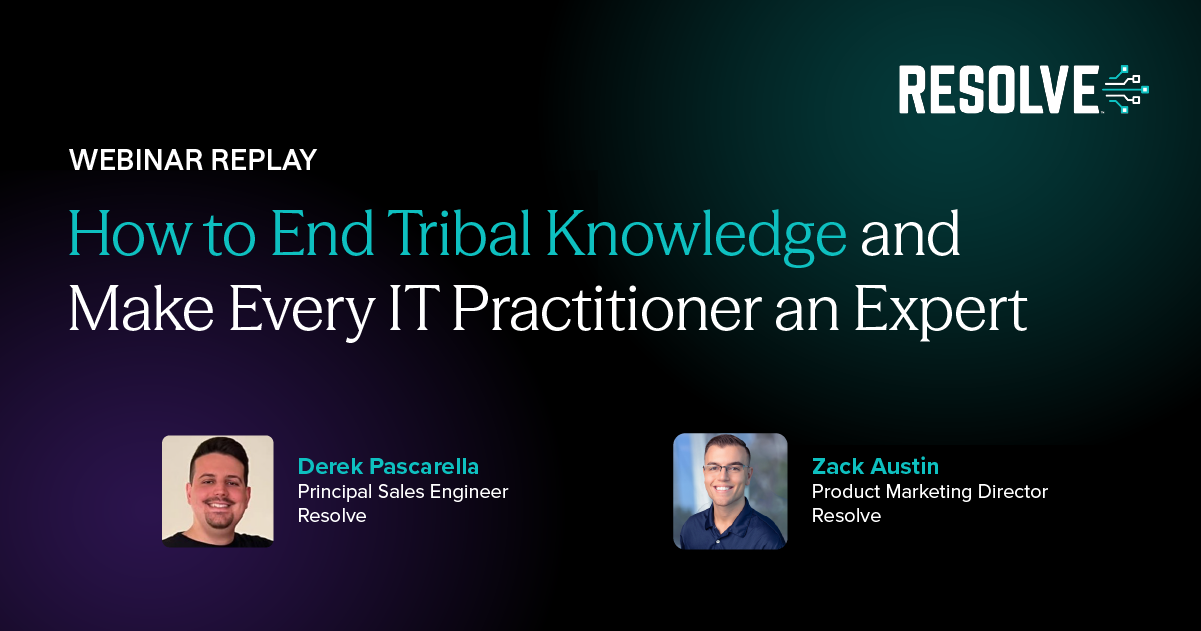
How to End Tribal Knowledge and Make Every IT Practitioner an Expert


Overview
Every IT organization has a small group of people who hold the answers everyone else depends on, and that dependency carries a cost that never appears on a dashboard. It shows up in constant interruptions, on-call rotations that keep routing back to the same names, investigations rebuilt from scratch every time an incident resurfaces, and the pressure carried by the one person who knows how the environment behaves under stress.
In this recorded live from Orlando session, Zack Austin and Derek Pascarella lay out a practical model for capturing that expertise and putting it to work across the entire team. The result is a team where every practitioner resolves issues with the speed, consistency, and confidence of your most experienced engineer.
What You'll Learn
- Why frequent, repeatable, high-confidence procedures deliver the fastest return, and how to prioritize them ahead of the edge cases.
- Understand how to measure hours returned, interruptions avoided, onboarding time, escalation quality, and employee confidence alongside MTTR and ticket volume.
- Watch an SME-led incident procedure become a tested workflow with built-in validation and escalation.
- If your most critical operational knowledge lives in a handful of heads, this session gives you a clear, measurable path to put it in the hands of every practitioner on your team.
Watch the replay to get ideas for how your organization can benefit from the governed automation of tribal IT knowledge.
Key Takeaways
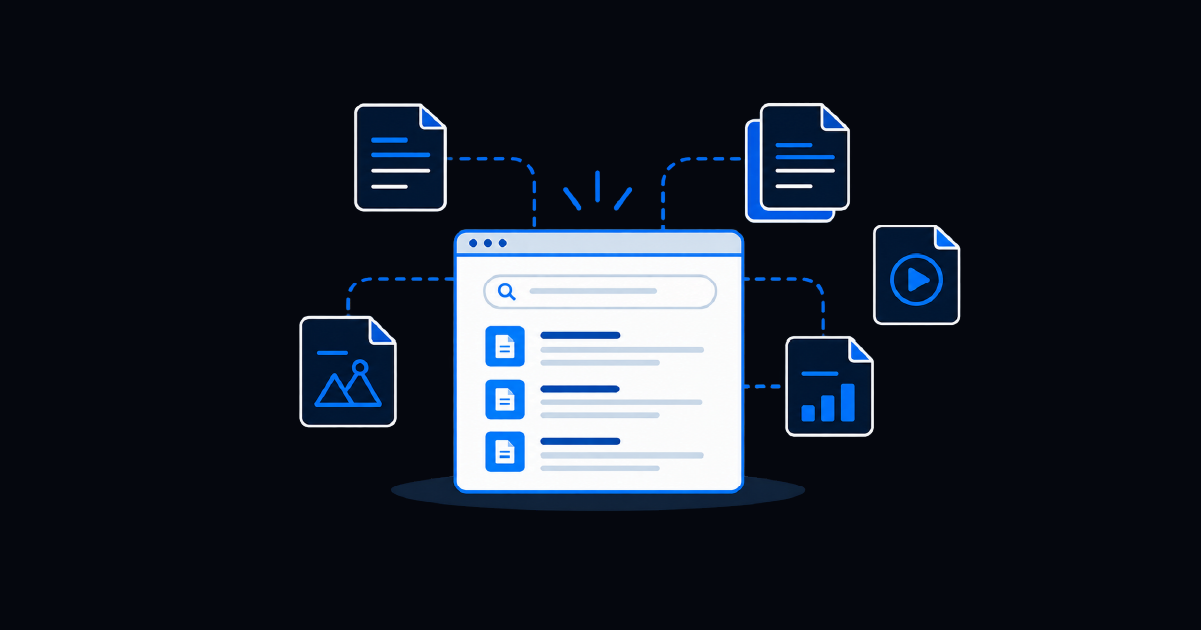
- Capture tribal knowledge from resolved IT tickets: Resolve retrieves historical resolutions from ServiceNow to uncover how experienced engineers handle recurring requests, helping teams access expertise without repeatedly interrupting subject matter experts.
- Turn historical resolutions into reusable knowledge base articles: Resolve’s Knowledge Agent drafts articles from resolved tickets for human review and approval, making documented procedures available to other IT practitioners.
- Build IT automation workflows using natural language: Jarvis, Resolve’s text-to-workflow assistant, turns a plain-language request into a workflow. The demonstration shows Salesforce user provisioning, with options to test, refine, and extend the workflow.
- Connect conversational AI to automated resolution: Resolve’s IT agent, RITA, retrieves a relevant knowledge article, summarizes the procedure, and offers to execute an available workflow moving from answering a question to completing the task.
- Scale IT automation with governance and human oversight: Teams can incorporate approval and validation gates, maintain audit trails, and log automation activity back to their ITSM system while improving procedures over time.
FAQs
How can AI help capture tribal knowledge in IT operations?
AI can help capture tribal knowledge by analyzing resolved IT tickets and identifying the procedures experienced engineers used to solve recurring issues. In the webinar, Resolve retrieves employee onboarding resolutions from ServiceNow and drafts a knowledge base article for human review and approval. This makes operational knowledge accessible to the wider team and helps reduce reliance on individual experts.
Timestamp: 06:58–10:44
How can IT teams turn knowledge base articles into automated workflows?
IT teams can use documented procedures as the foundation for building automated workflows. In the demonstration, Derek uses information from a generated knowledge base article to prompt Jarvis to build a Salesforce user provisioning workflow. After that workflow is available as a skill, RITA can retrieve the relevant guidance and offer to execute the account creation process.
Timestamps: 13:47–15:18 and 21:15–22:30
Which IT service desk and infrastructure tasks are good candidates for automation?
Common IT automation use cases discussed in the webinar include access requests, password resets, VPN troubleshooting, software fulfillment, patching, and collaboration or email issues. Infrastructure examples include virtual machine provisioning, DNS configuration, firewall change management, disaster recovery, and application deployment. The speakers highlight recurring tasks and complex procedures with multiple systems, validation steps, and conditional logic as strong candidates for capturing expert knowledge and building automation.
Timestamp: 27:25–30:06