Best AIOps Automation Tools in 2026: How to Choose



At a Glance
- AIOps detection tools identify and correlate issues; AIOps automation tools execute diagnostics, remediation, verification, and follow-up actions.
- The market includes closed-loop platforms, ITSM-embedded automation, runbook tools, RPA-adjacent platforms, and homegrown scripts.
- Each category has legitimate strengths, but “AIOps automation” does not guarantee end-to-end resolution.
- Teams should test integration breadth, upstream diagnostics, reasoning, and governed execution against real incidents.
- Strong tools extend the existing monitoring and AIOps stack rather than forcing a detection-platform replacement.
The phrase “AIOps automation” now appears across observability platforms, ITSM suites, orchestration products, runbook tools, and general automation software. The label alone says little about what happens after detection.
Some products create a ticket. Some launch a script. Others gather live context, choose an approved response path, execute across several systems, verify recovery, and update the operational record. All may be described as automation, but they solve different parts of the problem.
This guide provides a vendor-neutral framework for comparing the best AIOps automation tools in 2026. It focuses on tool categories, their tradeoffs, and the questions IT teams should ask before evaluating individual products.
What Is AIOps Automation?
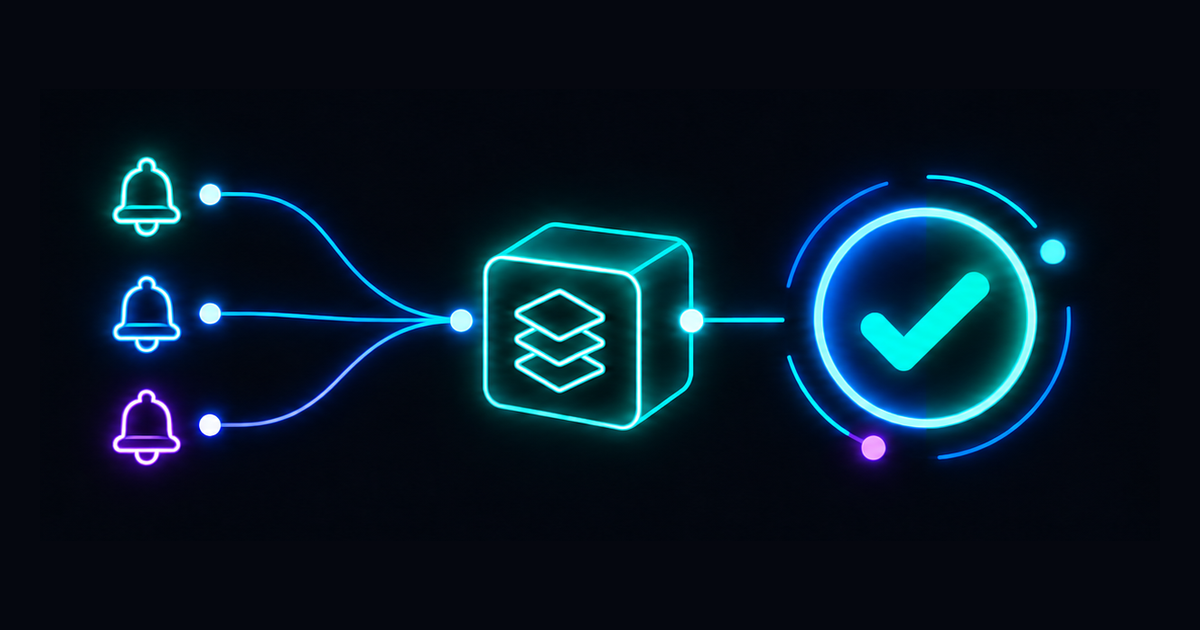
AIOps automation connects operational insight to action. Traditional AIOps and observability tools detect anomalies, correlate events, reduce noise, and identify likely causes. Automation takes the next step by gathering context, triggering workflows, applying remediation, validating service health, and documenting the outcome.
For the full definition and the distinction between detection-focused AIOps and outcome-focused automation, see Resolve’s guide to how AIOps automation is changing enterprise IT.
The Main Categories of AIOps Automation Tools
The categories below are not maturity scores. Each can be useful when it matches the incident patterns, integration needs, risk profile, and operating model of the team using it.
Closed-Loop AIOps Automation Platforms
These platforms are designed to sit between detection and resolution. They consume signals from monitoring, observability, or AIOps tools; retrieve additional context; run diagnostics; execute governed remediation; verify the result; and update ITSM or collaboration systems.
Their main advantage is breadth. A single incident may require evidence from the monitoring layer, a query against infrastructure, a network check, a cloud action, and an ITSM update. Closed-loop platforms coordinate that sequence without requiring the organization to replace its detection stack.
Organizations should verify how broad the integration surface is in production. “Works with” may mean a native bidirectional integration, a basic webhook, or a custom project. Ask the vendor to demonstrate the exact tools already in your environment.
ITSM-Embedded Automation
ITSM-embedded automation is attractive when teams already standardize heavily on one service-management suite. Tickets, ownership, approvals, SLAs, and audit history are already available, which can make workflow setup and reporting convenient.
The tradeoff is operational reach. Incident resolution often requires live action across monitoring, infrastructure, network, cloud, identity, and application systems. Confirm whether the suite can diagnose and remediate beyond its own ecosystem or mainly improves assignment, case handling, and ticket workflow.
Runbook and Orchestration Tools
Runbook tools turn documented response procedures into executable workflows. They are strong for known conditions such as service restarts, disk cleanup, certificate renewal, health checks, failover, or log collection.
Their quality depends on the trigger, decision logic, and maintenance behind the runbook. Rules-based execution is reliable when conditions are understood, but novel or ambiguous incidents may require a separate reasoning layer or human judgment before the correct workflow can be selected.
RPA-Adjacent Process Automation
General automation platforms can coordinate structured tasks across applications and user interfaces. They may be useful for operational processes that resemble business workflows, including data entry, notifications, approvals, or record updates.
Dynamic incident response is different. High-volume signals, changing infrastructure states, diagnostic queries, and service-health verification may not be native to an RPA-oriented platform. Teams should test event handling and operational context directly.
Point Scripts and Homegrown Automation
Scripts and simple triggers are often the fastest way to solve one known problem. Auto-scaling policies, restart commands, cleanup jobs, and single-purpose playbooks can deliver immediate value with little platform overhead.
As coverage grows, logic becomes scattered, dependencies change, and the original author may be the only person who understands failure handling. Reliable homegrown automation needs ownership, documentation, testing, versioning, and auditability.
Core Evaluation Criteria for Choosing an AIOps Automation Tool
A product demonstration should show more than a successful happy path. Use incidents from your environment and ask the vendor to explain what data the platform reads, how it chooses an action, what systems it can change, how it verifies success, and what happens when conditions are unsafe.
Test Integration Breadth, Not Logo Count
An integration catalog may look impressive while supporting only shallow triggers. Ask which objects and fields can be read, which actions can be executed, whether updates are bidirectional, how authentication is governed, and how the connector responds to API limits or failures.
The strongest AIOps solutions preserve the monitoring and detection investments a team already trusts. Requiring standardization on one detection vendor may simplify the architecture, but it also changes the buying decision from automation to platform replacement.
Test Governance Under Failure Conditions
Fast execution is useful only when it remains controlled. Ask the vendor to demonstrate an approval pause, failed diagnostic, unavailable target, rate-limited integration, unsuccessful remediation, rollback, and escalation. The audit trail should show the signal, context, decision, action, result, and final state.
Common AIOps Automation Use Cases
Most programs begin with a small set of recurring operational patterns:
- Noise-to-action triage: Validate alerts, suppress duplicates, enrich context, and create incidents only when action is required.
- Automated diagnostics: Collect logs, service state, topology, changes, metrics, and dependency health before escalation.
- Self-healing remediation: Execute approved fixes, confirm recovery, and update the operational record.
- Major incident acceleration: Assemble context, engage responders, launch parallel runbooks, and maintain communication and evidence.
For complete examples spanning incident triage, field operations, outage prevention, and signal clarification, see Resolve’s AIOps automation use-case guide.
Where Resolve Fits
Resolve fits within the closed-loop AIOps automation platform category. It works with monitoring, observability, AIOps, ITSM, infrastructure, network, and cloud tools already in place, adding the execution layer between an enriched signal and a verified outcome.
Workflows can retrieve context, run live diagnostics, execute approved remediation, validate service health, update records, and escalate exceptions. AI reasoning helps interpret signals and select the appropriate response path, while deterministic workflows, permissions, approvals, and audit trails govern execution.
This approach allows organizations to add automated remediation without replacing the detection stack they already use. Explore Resolve’s AIOps automation solution to see how the closed loop works from alert through resolution.
Choose the Category Before the Product
AIOps automation tools fall into a handful of categories with different strengths. ITSM suites offer convenience, runbooks provide repeatability, RPA extends general workflows, scripts solve focused problems, and closed-loop platforms coordinate action across the operational stack.
Understanding those tradeoffs matters more than comparing isolated features. The strongest fit will integrate broadly, gather context before acting, reason appropriately, and execute within visible guardrails. A platform should act safely and verify outcomes, not merely act fast.
Resolve delivers closed-loop AIOps automation on top of the monitoring and AIOps tools you already use.
Frequently Asked Questions
What is an AIOps automation tool?
An AIOps automation tool converts operational signals into action. It can gather context, run diagnostics, trigger governed workflows, remediate known issues, verify recovery, update records, and escalate exceptions.
How is AIOps automation different from AIOps?
AIOps primarily detects anomalies, correlates events, reduces noise, and generates insight. AIOps automation connects that insight to diagnostics, decisions, execution, verification, and documentation.
What are the main categories of AIOps automation tools?
The main categories are closed-loop AIOps automation platforms, ITSM-embedded automation, runbook and orchestration tools, RPA-adjacent process automation, and point scripts or homegrown automation.
What should organizations evaluate first?
Start with integration breadth, upstream context retrieval, diagnostic capability, reasoning, governance, remediation depth, verification, and exception handling. Test each capability against real incidents from the current environment.
Does AIOps automation replace monitoring?
Usually not. A broadly integrated automation layer should work with the monitoring and AIOps tools already in place; replacing detection is a separate buying decision.