AI Agent Builder: Create Agents That Fit Your IT Environment

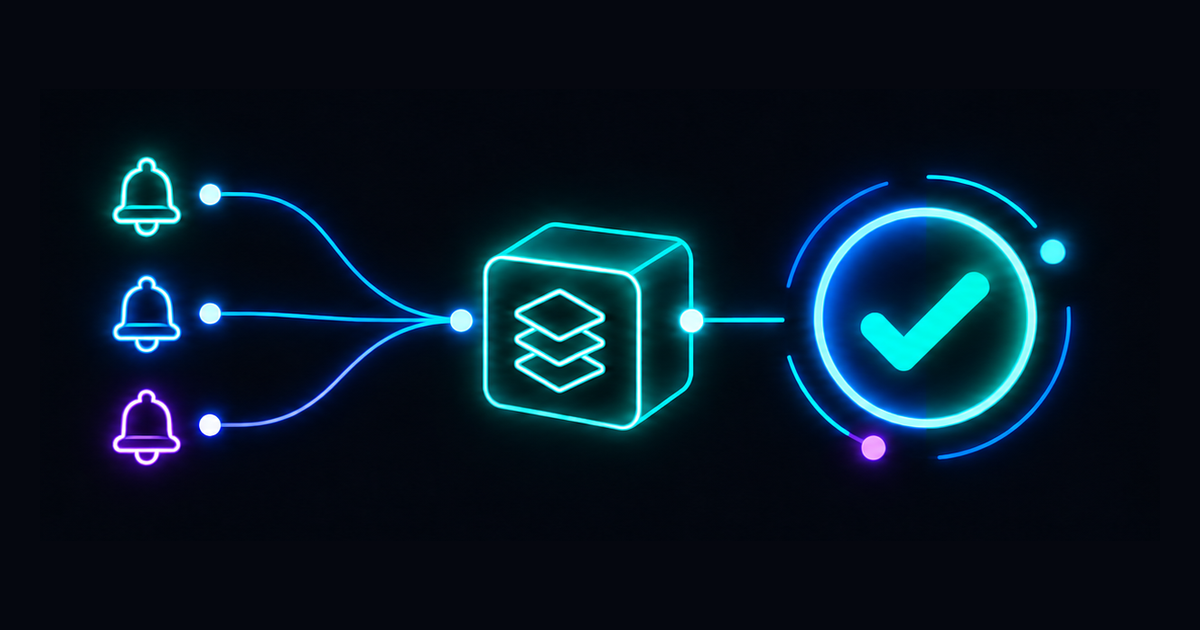


AI agents are quickly becoming part of the enterprise automation conversation because, among other things, they help teams move faster. But there is a major difference between an AI agent that sounds useful in a demo and an AI agent that is ready for production.
Production agents need scope. They need to know what they own, which systems they can touch, which workflows they can run, which teams they support, and where the boundaries are. They need to fit the environment they are working in, because no two IT environments are exactly alike.
That is why organizations need a leading AI agent builder. The goal here is to define an agent that understands its role, operates inside guardrails, and connects to automation your teams already trust.
What Is an AI Agent Builder?
An AI agent builder is a tool that lets teams create, define, test, and deploy AI agents for specific roles, workflows, departments, or business processes.
In an enterprise IT context, an AI agent builder should help teams define:
- What the agent is responsible for
- Which departments or users it serves
- Which workflows it can access
- Which systems it can act across
- What guardrails limit its behavior
- How it should respond in conversation
- When it should escalate to a human
- How it should be tested before production
That last point is particularly important. An AI agent builder should help teams create an agent that they trust.
For IT and operations teams, trust comes from definition. The more clearly an agent’s role, scope, and execution paths are defined, the easier it is to understand what it will do and what it will not do.
An AI agent that can do anything is not necessarily powerful. In many environments, it can be quite risky. A better agent is one that does exactly what it was designed to do.
Why Generic AI Agents Fall Short
Enterprise IT environments are complex, and a generic AI agent cannot understand them by default. It may be able to answer questions or summarize a ticket. It may even be able to suggest a workflow. But if it is not scoped to your environment, it may miss the details that matter most.
For example:
This is why one-size-fits-all agents are rarely enough for enterprise work. Agents need to be shaped around the work they are supposed to do.
What Teams Should Be Able to Define
A strong AI agent builder should help teams define the agent before they deploy it and to do so in a way that’s specific, not abstract.
At minimum, teams should be able to define the following:
Role and Identity
Every agent should have a clear role. It should know what it owns, what it supports, and how it should behave. A well-defined service desk agent should not act like a security response agent. A finance agent should not behave like an infrastructure agent.
Departments Served
Agents should be aligned to the teams and users they support. IT, security, operations, finance, and HR may all benefit from AI agents, but each function has different workflows, systems, policies, and escalation paths.
Guardrails and Scope
An agent should operate inside explicit boundaries. It should only execute the workflows, skills, and actions it has been given permission to use. Scope is what turns an AI agent from an open-ended assistant into a production-ready automation resource.
Linked Workflows and Skills
AI agents become more useful when they can connect to approved workflows. Instead of inventing a process, the agent should trigger the right workflow, follow the right steps, and operate inside known automation paths.
Testing and Validation
Teams should be able to test an agent conversationally before it goes live. They should confirm how it responds, what workflows it triggers, where it stops, and when it escalates.
Deployment Boundaries
Deployment should reflect the agent’s definition. An agent should be shipped to production only for the role, department, and workflows it was scoped to support.
This is what makes an AI agent builder useful for real operations. It turns agent creation from a prompt-writing exercise into an operational design process.
From Vision to Execution
Many organizations have a vision for AI agents. Fewer have a reliable path to production. That path should be straightforward.
First, teams build activities and workflows that represent approved execution. These are the steps an agent can use to complete real work.
Next, they define the agent’s role, departments, and guardrails. This gives the agent an identity and a scope.
Then, they link the agent to the workflows or skills it is allowed to use. This is where the agent becomes operationally useful. It can act, but only through the paths it has been given.
After that, teams test the agent in conversational chat. They can trigger it, inspect behavior, and confirm that it responds correctly before deployment.
Finally, they deploy it to production, scoped to its definition.
This flow matters because it keeps teams from jumping straight from idea to action. It creates a practical bridge between AI ambition and operational control.
Why Versatility Matters
An AI agent builder should not be limited to one narrow department or one type of service desk request.
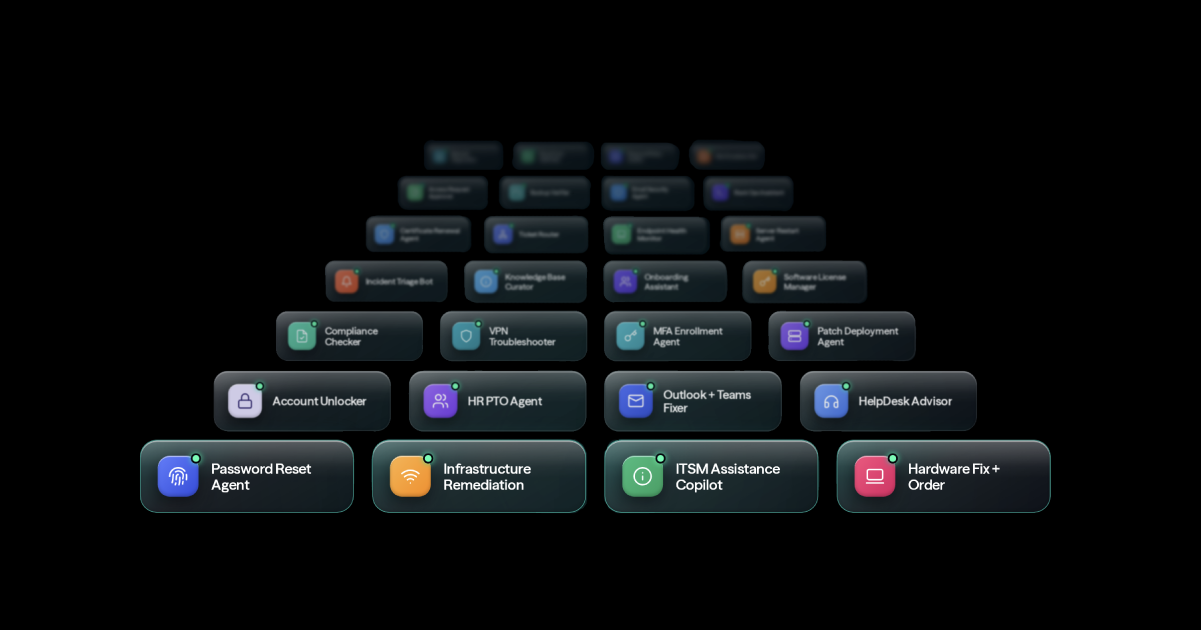
The same underlying model can support many teams when each agent is defined for its specific context. In IT, agents can help triage incidents, enrich tickets, and resolve common requests across fragmented toolchains.
In security, agents can support alert enrichment, SIEM triage, containment workflows, and human approval where needed. In operations, agents can respond to service degradation, connect to live signals, and trigger remediation.
In finance, agents can help with invoice exceptions, vendor onboarding, and expense policy work. In HR, agents can answer tier-one employee questions, support onboarding, and retrieve information from authoritative knowledge sources.
The important point is not that one agent should support all infrastructure. It is that one agent-building approach should support all of this, with each agent scoped to its own purpose.
That is how organizations can scale AI agents without losing control.
How Resolve AgentLab Works
Resolve AgentLab is the ultimate AI agent builder, helping teams define an agent’s role, departments, and guardrails, link it to workflows built in Jarvis, test it in conversational chat, and deploy it to production scoped to its definition.
That structure reflects a simple idea: agents should do exactly what they are built to do, not whatever an open-ended prompt suggests in the moment.
For enterprise teams, that distinction matters. The true value of AI agents is that they connect to governed execution in a way that fits your specific environment.
Where to Go from Here
An AI agent builder should help teams move from concept to production without sacrificing control.
The best agents are not generic. They have roles, departments, guardrails, workflows, testing paths, and deployment boundaries. They are built for the environment they serve.
For IT and operations leaders, that is how AI is able to move from an experiment to real-world operation. A strong AI agent builder should make it easier to create agents that understand their purpose, act through approved workflows, and support real teams across real systems.
This is the importance of allowing AI agents to go beyond traditional suggestive assistants and become an integral part of how enterprise work gets done.
See how AgentLab brings transformative success to your agentic efforts in IT and beyond. Request a demo →
FAQ: AI Agent Builders
What is an AI agent builder?
An AI agent builder is a tool that helps teams create, define, test, and deploy AI agents for specific roles, workflows, departments, or business processes. In IT, it should help define what an agent can do, which workflows it can use, and when it should escalate.
Why do AI agents need guardrails?
AI agents need guardrails because enterprise environments include sensitive systems, critical workflows, and compliance requirements. Guardrails help define what an agent can access, which actions it can take, and where human approval is required.
How is an AI agent builder different from a chatbot builder?
A chatbot builder typically focuses on conversation. An AI agent builder should go further by connecting the agent to workflows, systems, roles, permissions, testing, and deployment controls so it can help complete work.
What should IT teams look for in an AI agent builder?
IT teams should look for role definition, department assignment, workflow linking, guardrails, testing, deployment controls, orchestration, auditability, and integration with existing automation assets.
Why should AI agents be customized to each IT environment?
Every IT environment has different tools, policies, systems, workflows, and escalation paths. Customizing agents to the environment helps ensure they act in ways that match how the organization actually works.