A Guide to Agentic Orchestration


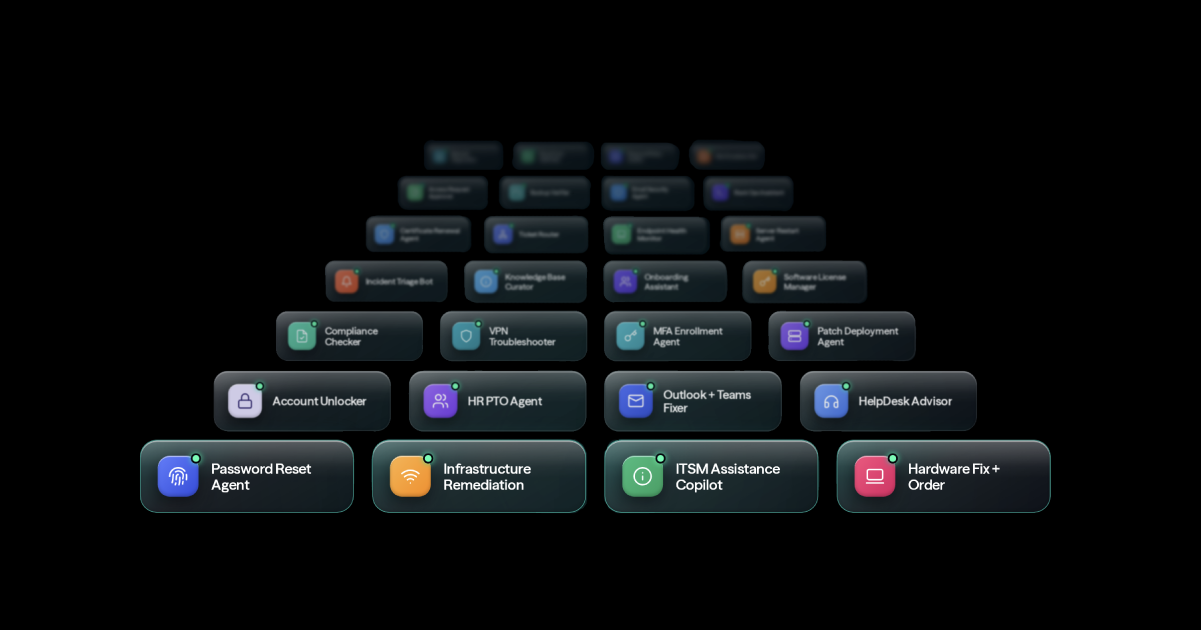
A lot of IT organizations (I daresay most IT organizations) aren’t short on bots; they’re short on direction.
You've got GenAI copilots here, virtual assistants there, and workflow bots running in many different tools. Maybe one automates diagnostics while another resets passwords.
But none of them talk. None of them collaborate. None of them understand what the others are doing. That’s not automation; that’s entropy.
What you need is agentic orchestration: an approach that emphasizes utilizing an agent of agents.
What Exactly Is Agentic Orchestration?

Agentic orchestration is the process of coordinating multiple AI agents that are each designed for specialized tasks to achieve shared outcomes. It moves you beyond single-use bots or isolated workflows and into a fully integrated system where agents collaborate, adapt, and execute autonomously.
Unlike bolt-on bots, which assist users or perform single tasks inside one tool, agentic orchestration coordinates assessment, actions, and outcomes across the user’s entire digital ecosystem.
This agent-of-agents approach is the difference between having a dozen tools versus having one intelligent engine powering your operations.
Think of it like an enterprise symphony; each AI agent is a unique instrument that handles triage, remediation, access control, and more. On their own, they’re impressive. But without a conductor, they don’t create music. They create noise.
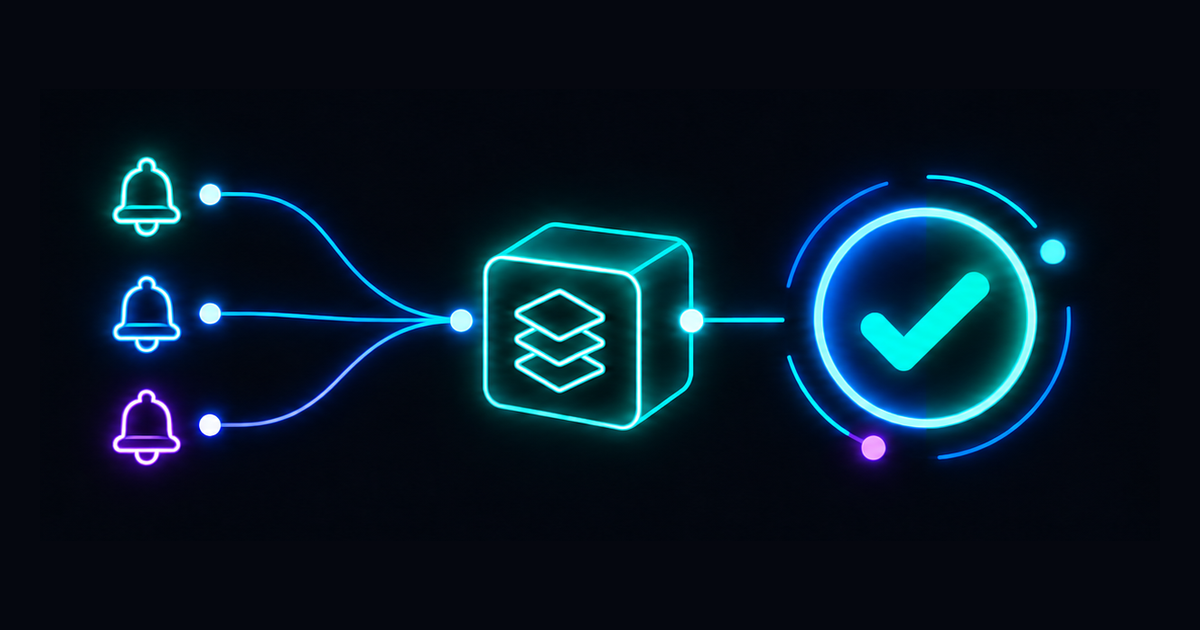
With Resolve, that conductor is the action controller, the orchestration layer that connects signals (like user requests or alerts) to the right agentic response. It ensures that every agent knows what to do, when to act, and how to pass context and outcomes across the entire ecosystem.
You can see exactly how this works below. AI agents (like RITA and Jarvis) receive intent, process language, and act on signals. The action controller handles execution, integrations, and governance. And beneath it all, outcomes like resolution, workflows, and Zero Ticket IT are delivered with full-loop visibility and control.
This architecture isn’t theoretical. It’s live and in production today, driving faster resolution, better experience, and true operational scale for some of the world’s most complex IT environments.
Why You Can’t Just Keep Adding Bots in a Silo
Let’s say you roll out a GenAI assistant in your service portal to help users ask better questions. Then, you launch a few scripts that automate password resets or service restarts.
Next comes a network ops tool that auto-creates tickets from alerts. Then a new observability dashboard. And, maybe, another bot to summarize incident history.
Each of these agents and tools does something useful. But none of them work together unless you force them to with an agent-of-agents approach, and every integration you build is a fragile, manual effort that breaks the moment anything upstream changes.
This leads to what we call automation sprawl:
- Dozens of disjointed bots and assistants
- Repetitive actions executed in parallel
- Redundant alerts and overlapping triggers
- No shared understanding or memory across systems
- And worst of all: no orchestration
The result? Your team spends more time managing automations than they would just doing the work manually.
Agentic orchestration fixes that by creating a collaborative layer across agents. It lets your tools work as a unified system, not a pile of digital duct tape.
READ MORE: AI Service Desk Showdown: RITA vs. Legacy Chatbots
What Agentic Orchestration Looks Like in Practice
At Resolve, agent of agents isn’t just a concept. It’s our foundation.
Let’s walk through what this looks like on both sides of the IT service equation:
1. At the Human Door: Smart, End-to-End Fulfillment
A user messages your IT assistant: “I need access to the Salesforce account.”
With a legacy ITSM bot:
- The chatbot forwards the request to a human agent
- A ticket is created and added to the backlog
- Someone manually checks permissions and grants access
- The loop is closed, slowly
With Resolve’s agentic orchestration:
- RITA, our resolution agent, captures the request and understands intent
- Checks identity, role, and policy via connected systems
- Launches an approval workflow or automatically provisions access
- Logs all actions in ServiceNow or your ITSM platform
- Notifies the user with a resolution message
No human touch. No manual routing. Just request to resolution in one seamless motion.
2. At the Machine Door: Real-Time Incident Response
Your monitoring system detects a RabbitMQ failure in your production cluster.
Without orchestration:
- The alert is sent to a dashboard
- A ticket is created, again
- Engineers log in, investigate, diagnose, and resolve manually
With Resolve:
- The event triggers an orchestration engine
- Diagnostic agents are launched automatically
- Jarvis, our workflow agent, evaluates context and suggests a resolution path
- A remediation workflow runs to restart services, verify health, and log the fix
- If escalation is needed, it’s enriched with full context and logs
This isn’t just automation. It’s intelligent, agentic orchestration.
How to Evaluate the Best Agentic Orchestration Platforms
The best agentic orchestration platform isn’t the one with the most AI agents; it’s actually the one that can interpret changing conditions, execute across systems, maintain enterprise control, and demonstrate that it can scale without creating another silo.
To that end, use these four criteria when evaluating a platform:
1. AI Reasoning Grounded in Operational Context
The platform should interpret everything from natural-language requests to alerts, system conditions, and operational history before selecting an action. It should pass relevant context between agents and workflows instead of forcing every automation to start from zero.
What to look for: Intent recognition, shared operational context, access to approved enterprise data, and the ability to account for IT conditions like user and policy.
Proof that it scales: That same reasoning layer can support requests and events across service desk, infrastructure, cloud, network, identity, and other IT domains without requiring a separate AI implementation for each one.
2. Governed, Deterministic Execution
AI is valuable when interpretation and judgment are required, but production execution must remain predictable every time. The platform should hand approved actions over to deterministic workflows that run consistently, verify results, and document every step while doing so.
What to look for: Reusable workflows, validation steps, exception handling, approval gates, policy enforcement, and overall separation between AI reasoning and production execution.
Proof that it scales: High-volume work can run through repeatable automation without increasing the risk of hallucination or model consumption, not to mention the number of engineers needed to supervise every outcome.
3. Platform-Agnostic, Cross-System Orchestration
Enterprise IT processes rarely stay inside one application anymore. Thus, the platform should coordinate work across ITSM, cloud, AIOps, security, network, identity, and enterprise systems without locking execution within one vendor ecosystem.
What to look for: The platform should include broad integration coverage, reusable components, bidirectional data exchange, API extensibility, and the ability to preserve the organization’s existing systems of record.
Proof that it scales: Resolve connects with more than 500 enterprise technologies, allowing new systems and use cases to join the orchestration layer without rebuilding every workflow or maintaining a growing collection of point-to-point integrations.
4. Enterprise Governance and Measurable Outcomes
Agentic orchestration must provide control over who can initiate work, what actions agents can take, and how any results are corded. It should also demonstrate whether automation is reducing operational work and improving resolution.
What to look for: Role-based permissions, approvals, policy controls, audit trails, execution reporting, and measurement of automated resolutions, time returned, and operational savings.
Proof that it scales: Governance and reporting apply consistently across agents, workflows, teams, and systems. As automation coverage grows, the organization retains visibility and control instead of accumulating another unmanaged layer of technology.
What Scalable Agentic Orchestration Looks Like in Practice
At the human level, scalable orchestration can, for example, take an employee’s request for Salesforce access, interpret the intent, verify identity and role, apply the appropriate policy, route an approval when required, provision access, update the ITSM record, and confirm completion. The process crosses several systems, but the employee experiences it as one request.
At the machine level, a monitoring alert can initiate a similar closed loop. The orchestration layer enriches the signal with operational context and runs approved diagnostics. It then selects the appropriate remediation workflow, verifies system health, and records the outcome. If human judgment is required, the issue reaches an engineer with the relevant logs, history, and actions already attached!
These examples demonstrate the practical test of enterprise scale: the platform can coordinate both human requests and machine events across multiple domains while preserving consistent execution, governance, and visibility.
READ MORE: Agentic Automation Workflows That Actually Work
Why Agentic Orchestration Matters: Strategic Value Over Tactical Wins
Most automation projects start with narrow goals:
- Reduce tickets
- Accelerate response
- Cut costs
That’s pretty good. But wielding an agent of agents unlocks something much better:
- Cross-silo execution: Service desk, network ops, cloud, identity, and compliance all work together.
- Resilience: If one agent fails, the orchestrator reroutes. No more brittle pipelines.
- Scale: As new agents or systems come online, they plug into the orchestration layer instead of being bolted onto a dozen integrations.
- Strategic agility: You can swap models, vendors, or tools without rewriting automations. Resolve abstracts the complexity.
That’s how you move from tactical automation to enterprise-wide transformation.
The Outcomes: What Our Customers Achieve
Here’s what happens when you move from agent sprawl to orchestration:
- 50–60% ticket deflection by resolving requests at the point of entry
- Up to 70% MTTR reduction for complex incidents
- 40%+ ITSM license savings by offloading approvals, triage, and fulfillment
- Higher employee satisfaction from faster, proactive support
- Better compliance and auditability through automated documentation
And perhaps most importantly, teams get to focus on strategy instead of firefighting.
Resolve: The Agent of Agents
This isn’t a theoretical model. It’s how Resolve is architected:
- RITA is the agentic IT assistant that handles requests, triage, and task execution at the human door.
- Jarvis is the AI architect that builds workflows in natural language and automates orchestration logic.
- Resolve’s platform is the orchestrator layer that connects them and every other tool in your stack.
Together, they coordinate dozens of specialized agents into a unified, intelligent system.
Resolve doesn’t compete with your automation stack. It conducts it.
Don’t Automate More. Orchestrate Better.
The future of IT automation isn’t about chasing the next LLM plugin or bot. It’s about building systems where intelligent agents can act, adapt, and improve together.
That’s agentic orchestration.
And Resolve is how you get there.
Ready to See Agentic Orchestration in Action?
Frequently Asked Questions About Agentic IT Orchestration
What is agentic IT orchestration?
Agentic IT orchestration combines AI reasoning with governed automation to coordinate requests, alerts, decisions, and actions across enterprise systems. AI interprets context and determines the next step, while deterministic workflows execute, verify, and document the resulting action.
How is agentic orchestration different from bolt-on AI bots?
Bolt-on bots generally assist with isolated tasks inside a particular application. Agentic orchestration connects agents, workflows, data, and systems through a shared execution layer. This allows work to move across multiple digital domains without losing context or governance.
What should enterprises look for in the best agentic orchestration platform?
The best agentic orchestration platforms combine context-aware AI reasoning, deterministic execution, and cross-system integration. Buyers should also evaluate such factors as integration coverage, approval controls, auditability, workflow reuse, outcome verification, and the ability to measure operational impact.
How does agentic orchestration scale across enterprise IT?
Agentic orchestration scales by centralizing shared capabilities instead of building separate bots and integrations for every use case. Reusable workflows, platform-agnostic integrations, common governance controls, and consistent execution allow organizations to expand automation across teams and systems without multiplying technical debt.