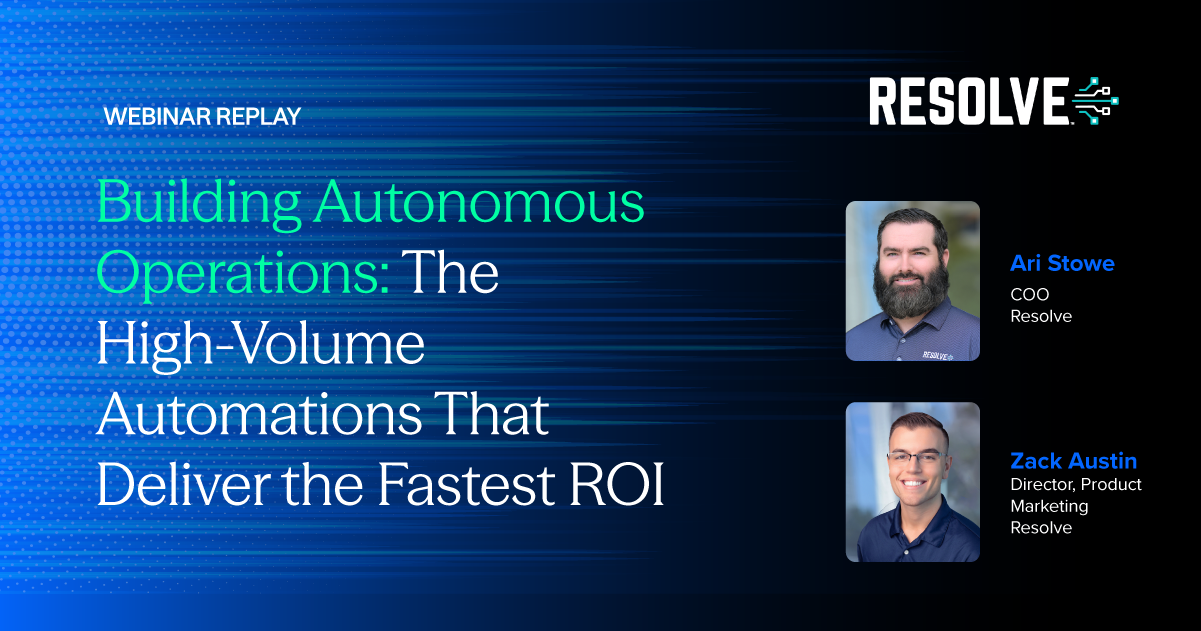
Building Autonomous Operations: The High-Volume Automations That Deliver the Fastest ROI


Overview
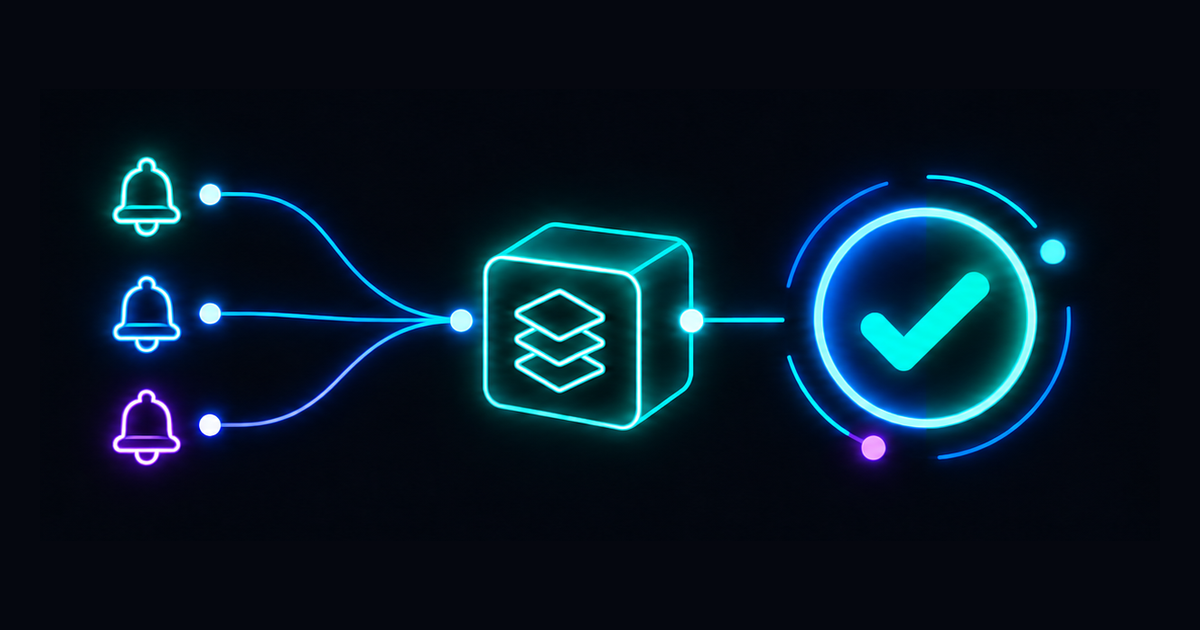
IT teams are constantly under pressure to reduce ticket volume and move faster. Tragically, though, fragmented tools and manual triage keep operations reactive.
Make no mistake; teams are trying to initiate automation, but these initiatives lean on bots, scripts, workflows, and point solutions that can’t scale across the enterprise.
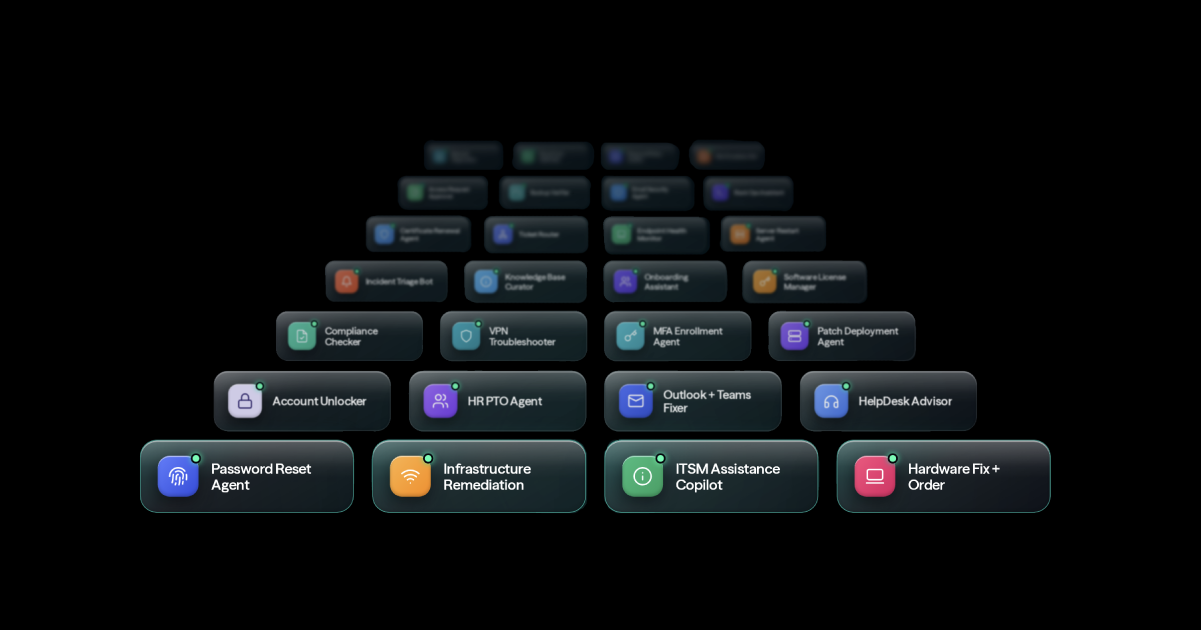
If this is the stage that you’re at, our webinar is for you. We’ll explore how stage one of the Autonomous Operations Framework eliminates high-volume IT work like password resets, account unlocks, and access requests through automated, policy-enforced resolution.
Join COO Ari Stowe and Director of Product Marketing Zack Austin as they discuss:
- How agentic resolution replaces common ticket-driven workflows with autonomous execution
- What stage one of the Autonomous Operations Framework enables and where to start for immediate impact
- A demonstration of Resolve's approach to autonomous operations
Key Takeaways
- High-volume automations deliver the fastest IT automation ROI because they eliminate repeatable friction at scale. When teams automate these Tier 1 tasks, they immediately reduce service desk workload and free up human operators for higher-impact problems.
- Autonomous IT operations aren’t about “full autonomy,” they’re about controlled execution with intelligent escalation. The discussion frames service desk automation as a maturity journey where automation handles predictable work end-to-end, but humans stay in the loop for edge cases. This is the core of agentic resolution.
- Tier 1 ticket automation is the easiest on-ramp to enterprise IT automation because it’s measurable, repeatable, and low-risk. By starting with workflows like password resets, access requests, and account provisioning, teams build trust in IT operations automation while generating immediate ticket deflection.
- Guardrails are what make autonomous operations sustainable, not optional. The webinar reinforces that teams shouldn’t treat guardrails as “security red tape,” but as a design requirement that enables scale. Clear boundaries around what automations can touch, what approvals are required, and when escalation triggers are activated are what allow automation to grow safely across the enterprise.
- As high-volume automations mature, the organization stops measuring success purely in ticket counts and starts measuring experience, deflection, and business continuity. Over time, service desk automation becomes a foundation for broader IT operations automation, where systems don’t just resolve incidents faster, but prevent entire categories of tickets from existing in the first place.
FAQs
Q: How do teams decide when to automate vs escalate to a human?
A: The best approach is to automate predictable, repeatable Tier 1 tickets while escalating anything that introduces uncertainty, risk, or unusual context. Teams typically define confidence thresholds and decision points where the automation can continue executing, request confirmation, or route the case to a human. This keeps autonomous IT operations safe while still maximizing ticket deflection and accelerating resolution.
Timestamp: 44:21 - 48:00
Q: How can AI teams set guardrails?
A: Guardrails start with defining what the system is allowed to do, what it is not allowed to touch, and what conditions require human approval. Teams should frame guardrails as a mix of technical controls (permissions, policy enforcement, audit trails) and operational design (clear escalation paths, exception handling, rollback processes). This ensures agentic resolution can operate at speed without creating uncontrolled risk across enterprise IT automation environments.
Timestamp: 49:25 - 52:34
Q: How do automations set teams up for the next stage of IT success?
A: High-volume IT automations create immediate ROI, but their bigger value is that they establish the operating model for scale. By automating Tier 1 workflows like password reset automation and access requests, teams build trust, improve knowledge quality, and generate the metrics needed to justify expansion. These wins are the foundation for the next stage of IT operations automation: moving from reactive service desk automation to autonomous operations frameworks where the system prevents problems and resolves incidents end-to-end.
Timestamp: 52:31 - 55:55