.png)
Improving Digital Employee Experience Through Intelligent Automation


Overview
Replay is now available!
ITSM owners and service desk leaders have spent years on digital transformation, but most of the investment has stopped at the front door. Portals got smarter, chatbots got friendlier, and the work behind them still falls back to humans. Agentic AI is exposing the gap: a better front door without backbone orchestration is just a faster handoff.
This webinar examines why front-door investments alone stall service desk transformation, how pairing a conversational front door with backbone orchestration closes the loop from resolution request, and what end-to-end automation looks like in practice with Resolve's Agentic Resolution Fabric. Vipin Nair, Head of Strategic Partnerships, and Reetesh Mishra, ISV Lead- AI Business, show how organizations across regulated industries are resolving work end-to-end without adding headcount or replacing their ITSM.
What we'll cover
- Why most digital transformation programs stall at the portal, and what the gap costs in resolution times, ticket backlogs, and SLA risk
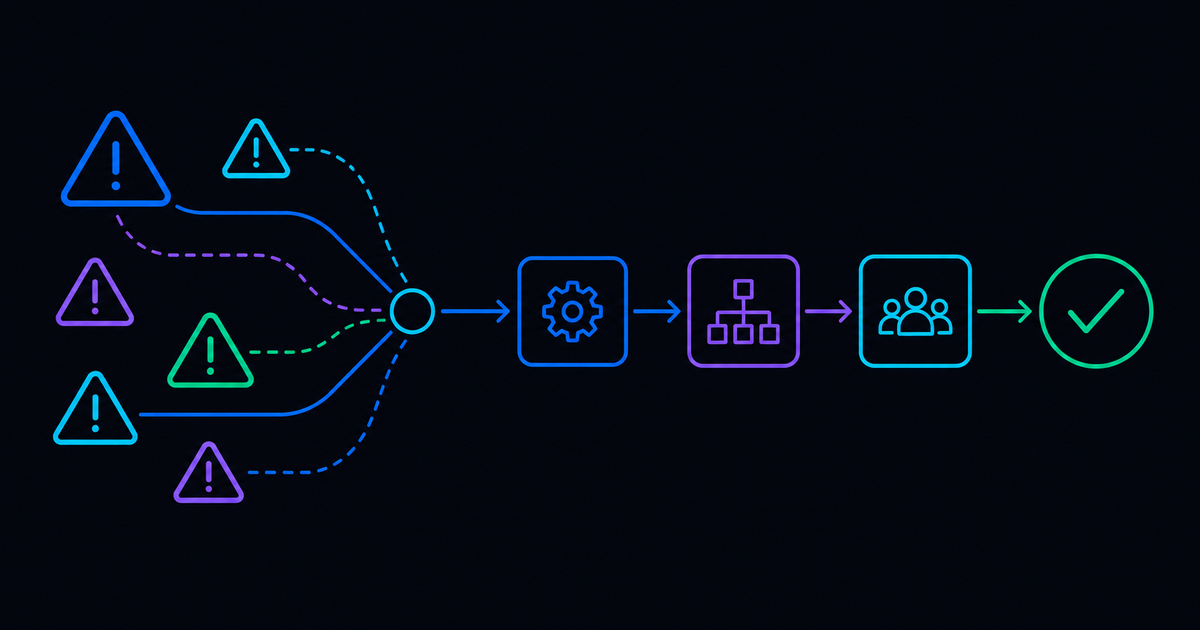
- How a conversational front door paired with backbone orchestration moves work from request to resolution without human handoffs
- What end-to-end resolution looks like in practice with Resolve's Agentic Resolution Fabric: Knowledge Agent, Automation Agent, and Agent Assist working through RITA
We’ll wrap with a live discussion on how organizations are scaling intelligent automation without disrupting existing ITSM investments, followed by audience Q&A.
This webinar replay is now available on demand.
Key Takeaways
Enterprises have made massive investments in modernizing their IT Service Management (ITSM) platforms, building polished self-service portals, and AI-powered chatbots, yet the digital employee experience remains broken at the core. The root cause is a critical gap between the front-end interface and the backend resolution engine. Most chatbots still only raise tickets or return keyword-matched knowledge articles, meaning all that increased ticket volume funnels directly onto the same human resolvers, driving up Mean Time to Resolution (MTTR) and breaking SLAs. Improving the digital employee experience and IT support automation requires more than a beautiful front door; it requires intelligent orchestration that closes the loop end-to-end.
Resolve addresses this gap through a three-pillar agentic AI architecture: Answer, Execute, and Guide. These pillars sit on top of existing ITSM investments without replacing them. The platform understands user intent in 130+ languages, executes multi-step automated remediations across connected systems, and intelligently escalates to human resolvers with full context and suggested next steps when needed. With a library of 500,000+ pre-built automations and 5,000+ orchestration workflows, enterprises can go live in as few as 40–50 days. Real-world results speak for themselves: customers like Ericsson have run 97 million automations annually, saving $80M, while others have achieved up to 90% ticket deflection, 99% faster MTTR, and ROI within the first 30 days. This represents a true shift from reactive ticketing to touchless, autonomous IT remediation.
FAQs
Q: Why haven't traditional chatbots solved the IT service problem? (~5:32 – 6:29)
A: Most ITSM chatbots are designed only to log tickets or perform keyword-based knowledge article searches. They don't actually diagnose or resolve the underlying issue. In turn, the resolution still falls to a human agent. This means faster ticket intake with no faster resolution, creating a backlog and worsening MTTR and SLA compliance.
Q: Does implementing Resolve require replacing existing ITSM tools or systems? (~10:09 – 10:33)
A: No. Resolve is designed to layer on top of your existing ITSM platform, automation systems, and collaboration tools; not replace them. It integrates with and orchestrates across those investments, meaning none of your prior spend is wasted. It fills the orchestration and automation gap without a rip-and-replace approach.
Q: What kind of real-world results have customers seen, and how quickly? (~17:50 – 22:50)
A: Results vary by customer, but have been significant across the board. Highlights include: up to 90% ticket deflection (with 96% of email-based tickets auto-resolved at Dexcom); 70% deflection in 90 days at Garden Health; 75% monthly auto-resolution at Friesland; $80M annual savings and 97M automations/year at Ericsson; and a 99% reduction in MTTR at Cable & Wireless (from 6 minutes to 4 seconds). Peel Regional Police saved $190K within the first 30 days alone.
.png)