ITIL Incident Management: A Practical Guide to the Framework


At a Glance
- ITIL incident management provides a repeatable process for restoring normal service as quickly as possible while minimizing business impact.
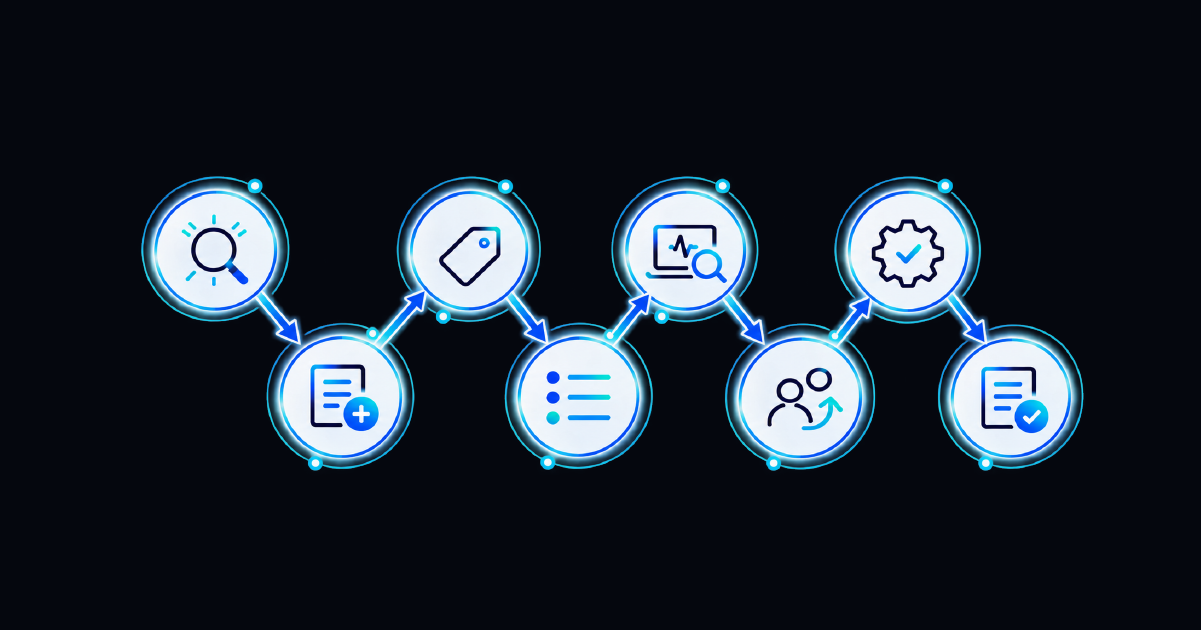
- The process commonly progresses through eight practical stages, from identification and logging through resolution and closure.
- Clear ownership matters at every handoff. Incidents often stall when responsibility between L1, L2/L3, and incident management is unclear.
- Priority combines impact and urgency, rather than simply reflecting how loudly an incident is reported.
- Automation can accelerate individual stages while the ITSM platform remains the system of record for tickets, SLAs, and audit history.
Incidents are inevitable. Inconsistent incident response doesn't have to be.
Without a defined process, the same outage can be handled completely differently depending on who's working. One technician immediately recognizes the issue. Another spends 30 minutes reconstructing context. A third escalates it to the wrong team.
ITIL incident management provides a framework for replacing that variability with a repeatable process.
The objective is straightforward: restore normal service quickly and consistently while minimizing business impact.
What Is ITIL Incident Management?
ITIL incident management is the structured process for restoring normal service operation as quickly as possible following an unplanned interruption or reduction in service quality.
It is primarily reactive. An incident has occurred, and the immediate objective is to restore service.
That distinguishes incident management from problem management, which investigates underlying causes and works to prevent incidents from recurring.
Standardization matters because it creates consistency. Teams can establish ownership, measure performance against service-level targets, and reduce the variability that comes from relying on individual knowledge.
The exact workflow and ownership model can vary by organization, but the practical ITIL incident management process commonly includes the following stages.
The Stages of the ITIL Incident Management Process
- Identification begins when a user reports an interruption or a monitoring system detects one automatically.
- Logging creates the formal incident record, including the affected service, time, reporter, symptoms, and other context needed to begin work.
- Categorization classifies the incident so it can reach the correct team and be reported consistently later.
- Prioritization determines how quickly the incident needs attention based on its business impact and urgency.
- Diagnosis and investigation establish enough understanding to take corrective action. Teams don't necessarily need the ultimate root cause yet; they need enough information to restore service safely.
- Escalation occurs when the current team lacks the required expertise or when business impact demands greater coordination. Functional escalation moves work to specialists, while hierarchical escalation brings in additional management attention.
- Resolution and recovery apply the fix and restore service.
- Finally, closure confirms that service has recovered and records the outcome for future reference.
The individual stages aren't particularly complicated. Their value comes from making sure incidents move consistently from one to the next.
Who Owns Each Stage?
Ownership usually shifts as an incident progresses.
The service desk or L1 team commonly handles initial logging, categorization, prioritization, and first-line diagnosis. Known issues may be resolved immediately.
When deeper expertise is required, L2 or L3 technical teams take over diagnosis and remediation.
For major or heavily escalated incidents, an incident manager coordinates the process across teams, tracks progress, manages escalation, and keeps stakeholders informed.
How Priority Is Determined
ITIL incident management prioritization generally considers two factors:
Impact: How broadly or severely is the business affected?
Urgency: How quickly does service need to be restored?
Organizations typically combine the two in a priority matrix. A simplified version might look like this:
The exact mapping varies by organization, but the principle matters more than the labels.
Priority shouldn't mean “how upset is the person reporting this?”
Using consistent impact and urgency criteria helps teams apply SLA targets fairly and prevents every vocal escalation from becoming the new highest-priority incident.
Incident Management vs. Problem Management vs. Major Incident Management
These practices overlap, but their objectives differ.
Incident management focuses on restoring service for a specific disruption as quickly as possible.
Problem management investigates and addresses the underlying cause of one or more incidents to reduce recurrence.
Major incident management applies heightened coordination, escalation, and communication to incidents with severe business impact. It often follows the same fundamental incident-management principles but with dedicated leadership and a more intensive communication cadence.
The distinction is useful because restoring service and eliminating root cause aren't always the same task. A temporary workaround may resolve an incident while a separate problem-management process investigates why it happened.
Where Automation Fits into the ITIL Framework
Automation doesn't replace ITIL incident management. It can execute parts of the process faster and more consistently.
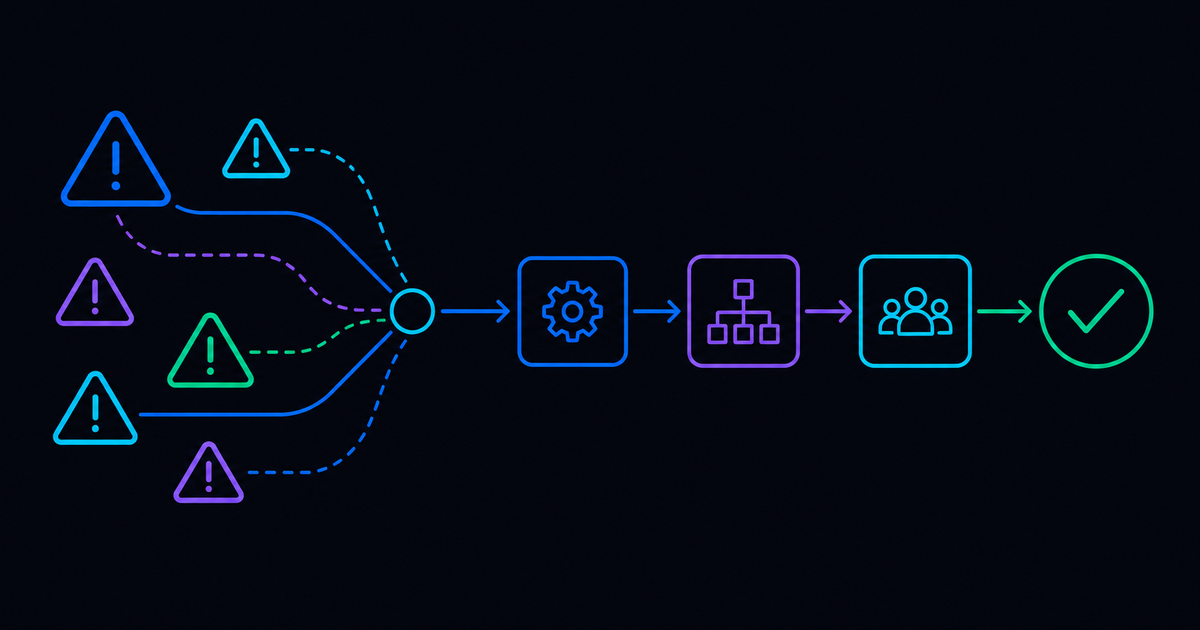
A monitoring alert can automatically create and enrich an incident record. Rules can categorize and route it. Automated diagnostics can gather context before a technician begins investigation.
For predictable, well-understood issues, automation can go further by executing an approved remediation, validating recovery, and updating the incident record with the result.
Resolve's ITSM automation operates within that model.
The ITSM platform remains the system of record for incidents, SLAs, ownership, and audit history. Automation and orchestration execute the operational work tied to those records rather than creating a parallel process outside them.
That allows organizations to accelerate appropriate stages without abandoning the framework governing them.
Make the Process Move
ITIL incident management works because it gives teams a consistent path from disruption to restored service.
Identification, logging, categorization, prioritization, diagnosis, escalation, resolution, and closure each serve a specific purpose. Clear ownership keeps incidents moving between those stages, while consistent impact-and-urgency criteria ensure attention goes where it's actually needed.
Technology can make that process faster, but it doesn't eliminate the need for the process itself.
The opportunity is to automate predictable work inside the framework: gathering context, executing diagnostics, performing known remediations, verifying recovery, and keeping the system of record current.
Resolve automates incident diagnostics and remediation within your ITSM processes.
Frequently Asked Questions
What is the ITIL incident management process?
The ITIL incident management process provides a structured approach to restoring normal service after an interruption. Common stages include identification, logging, categorization, prioritization, diagnosis, escalation, resolution, and closure.
What is the main goal of ITIL incident management?
The primary goal is to restore normal service as quickly as practical while minimizing business impact. Identifying and eliminating the underlying root cause is generally handled through problem management.
How is incident priority determined in ITIL?
Priority is generally determined by combining impact and urgency. Impact reflects the breadth or severity of the business effect, while urgency reflects how quickly resolution is required.
Can ITIL incident management be automated?
Yes. Tasks such as incident creation, enrichment, categorization, diagnostics, remediation, verification, and ITSM updates can be automated while the ITSM platform continues to govern the overall incident-management process.