What Is a Citizen Developer, and Why IT Teams Need Them Now

At a Glance
- Citizen developers use low-code, no-code, or AI-assisted tools to improve processes close to their own work.
- They help organizations address automation demand that cannot wait behind every other request in a centralized IT backlog.
- Many low-code tools still require conditional logic, data mapping, connector configuration, and debugging that limit who can build successfully.
- Citizen development is not the same as shadow IT when people build through approved platforms with clear ownership and controls.
- The strongest model closes the access gap first, then applies governance according to the workflow's data, reach, and operational risk.
"Citizen developer" sounds simple: give business teams low-code tools and let them solve their own process problems. In practice, many organizations discover that the tools are still too technical for the intended builders or too loosely governed for IT to trust.
Both problems matter. A policy cannot create citizen developers if the tool still demands platform expertise. An approachable builder cannot scale safely if workflows operate outside permissions, testing, audit, and lifecycle controls.
The workable model combines access and governance. People closest to a process can turn their knowledge into automation, while IT defines the platform, boundaries, and review path that keep that work supportable.
What Is a Citizen Developer?
A citizen developer creates software-enabled solutions without working as a professional developer. They are often process owners, analysts, administrators, or operations specialists in HR, finance, service delivery, or another business unit.
They use low-code, no-code, or AI-assisted platforms to build request flows, approvals, notifications, data collection, and task routing. Resolve's guide to low-code automation explains how visual tools can make automation more accessible and understandable to non-IT teams and stakeholders.
Professional developers handle complex architecture, custom software, sensitive integrations, and engineering standards. Citizen developers handle bounded problems they understand within approved components.
Citizen development is also distinct from shadow IT. It happens inside a program IT can see and govern; shadow IT uses unapproved tools, hidden connections, unknown ownership, or deployments that bypass controls.
Why IT Teams Need Citizen Developers Now
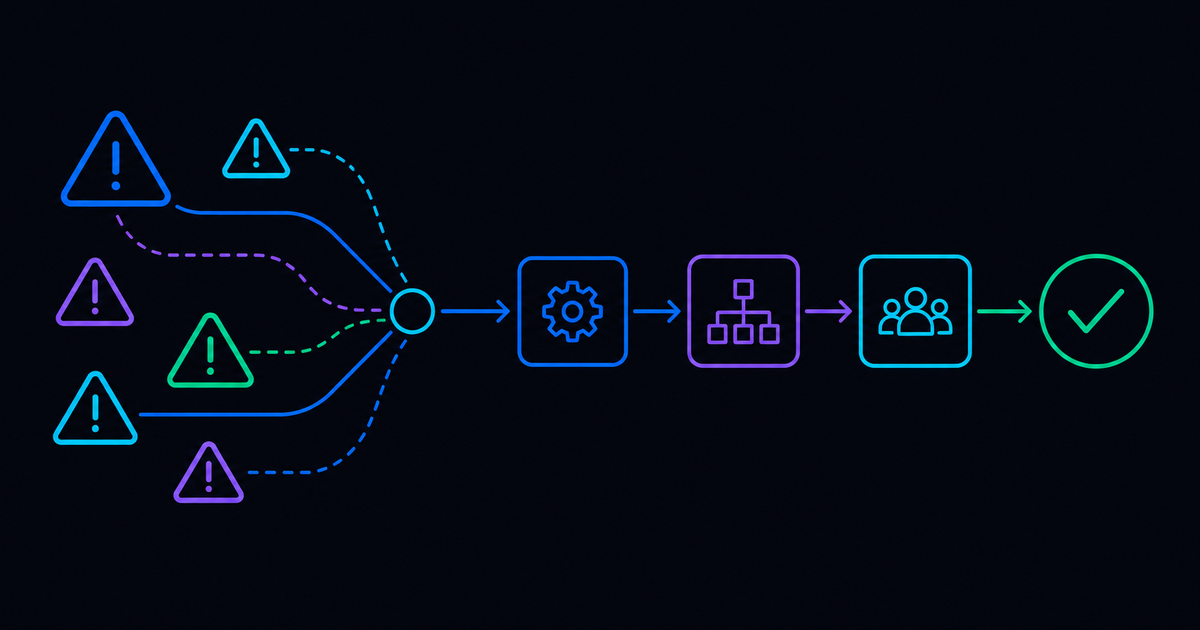
The traditional intake model sends every workflow request to a central IT or automation team. Even a small approval flow competes with security work, platform projects, incidents, integrations, and higher-risk automation.
Demand is unlikely to shrink. Resolve's guide to enterprise workflow automation identifies service requests, access tasks, incident diagnostics, and onboarding workflows as strong automation candidates when their inputs, decisions, and outcomes are clear. Requiring professional developers to build every departmental workflow concentrates scarce expertise on work that process owners may already understand.
Citizen development offers a middle path. Process owners know which handoff creates delay, which exception matters, and which information is missing. They can create a first version while IT provides reusable components and escalation support.
The same operating principle applies across the program: give process owners a consistent, approved way to handle bounded work while preserving human review for specialized, sensitive, or higher-risk cases.
The Access Gap Nobody Talks About
Low-code reduced the amount of syntax required to build software. It did not automatically remove the need to think like a developer.
A visual workflow can still require Boolean conditions, nested branches, data types, field mapping, APIs, authentication, and error handling. When a connector fails, the builder may need to inspect payloads or decipher an error message.
That is manageable for a platform administrator. It is a barrier for the HR operations lead who knows onboarding but not how to map a response object or debug an expression.
The result is a citizen development program with few actual citizen developers. Business teams submit ideas while the same specialists build them. The interface changed; the backlog did not.
The better evaluation question is not "Does the platform have a drag-and-drop builder?" It is "Can the intended process owner describe a bounded workflow, produce a testable result, understand what was built, and make a safe revision without continuous developer assistance?"
Run that test with an actual process owner and a realistic exception, not a curated demo. Track where the person needs help, whether the generated logic remains understandable, and whether they can correct a failed test. Those observations reveal the real access barrier.
Citizen Developer Governance: Reframing the Risk
Governance is sometimes framed as the reason to restrict citizen development. The larger risk is ungoverned creation: unknown apps, excessive permissions, unapproved data movement, and workflows no one owns after the builder changes roles.
Resolve's guide to agentic AI governance identifies the controls required when automation can act across enterprise systems. These include permission limits, trusted data sources, human approval gates, action restrictions, rollback logic, observability, and audit trails.
These controls require guardrails, not a return of every low-risk workflow to professional developers. Governance should be the default path, with approved components, safe settings, and permission checks built into the workflow rather than left for individual builders to remember.
A Practical Citizen Developer Governance Model
This tiered model keeps review proportional to risk. IT can publish approved patterns for low-risk work, require additional controls as data or system access expands, and retain ownership of privileged execution.
Governance also needs lifecycle management. Every workflow should have an owner, purpose, last review date, dependencies, and retirement path. A safe workflow can become risky when the process, connector, permissions, or builder changes.
The review path must also be usable. Publish clear thresholds, expected evidence, and response times so builders know what they can deploy independently and when to involve IT. Slow or ambiguous reviews encourage people to route around the program.
How Jarvis Closes the Access Gap
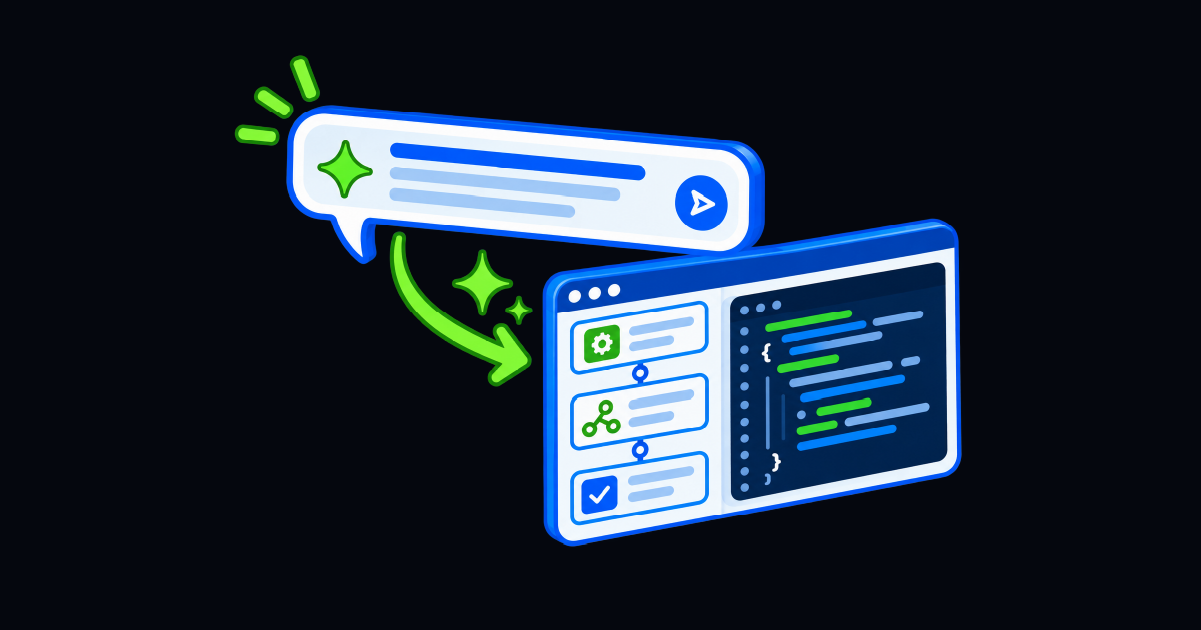
Jarvis, Resolve's AI workflow builder, lets a user describe a process in plain language and generates a working workflow on the canvas. Instead of manually creating each branch and mapping every activity from a blank starting point, the process owner can begin with the intended outcome and review what Jarvis builds.
That changes who can create a useful first version. Process owners can contribute directly without learning the mechanics of a traditional low-code builder.
Jarvis generates workflows from platform-native components, so the result can use the same permissions, approvals, testing, logging, and auditability as other governed automation. Resolve's governance and security automation keeps policy attached to execution rather than adding it after the build.
The distinction matters: natural language lowers the creation barrier, while deterministic workflow execution keeps approved actions predictable. Citizen developers can express business intent; IT can maintain the components and boundaries that turn that intent into reliable automation.
What Citizen Development Means for IT Teams
Citizen development changes IT's role from builder of every workflow to platform owner, enabler, and governor. Within a broader automation and orchestration program, IT defines the approved environment, integration catalog, data policies, reusable patterns, support model, and thresholds that trigger formal review.
Start with bounded, visible use cases. Train process owners, publish examples, create an intake path for higher-risk work, and measure completion time, failures, rework, and hours returned. The goal is useful automation without hidden risk or maintenance debt.
Close the Access Gap Without Losing Control
Citizen developers can help IT organizations reduce automation backlogs and put process knowledge to work. But that promise depends on two conditions: the tool must be accessible to the people closest to the work, and the platform must make safe, governed execution the normal path.
Low-code alone does not guarantee access. Policy alone does not guarantee governance. Plain-language creation, approved components, proportional review, and auditable execution are what allow citizen development to scale.
Jarvis helps process owners describe a workflow in plain language and build it inside Resolve's governed platform.
Frequently Asked Questions
What is a citizen developer?
A citizen developer is a business employee who builds workflows, apps, or automations without working as a professional software developer. They use approved low-code, no-code, or AI-assisted tools to solve bounded process problems within organizational controls.
Is a citizen developer the same as a professional developer?
No. Professional developers typically build and maintain complex software, integrations, and architecture. Citizen developers apply business and process expertise to narrower use cases through platforms designed to reduce coding and infrastructure work.
Is citizen development the same as shadow IT?
No. Governed citizen development uses approved tools, components, data access, ownership, testing, and review. Shadow IT operates outside IT visibility or policy and may introduce unknown systems, permissions, dependencies, and data exposure.
How should IT govern citizen developers?
IT should define approved platforms and connectors, separate development from production, apply role-based permissions and data policies, classify workflows by risk, require review for sensitive actions, maintain audit logs, and assign an owner and lifecycle to every deployed workflow.