
ITSM Best Practices for Enterprise IT

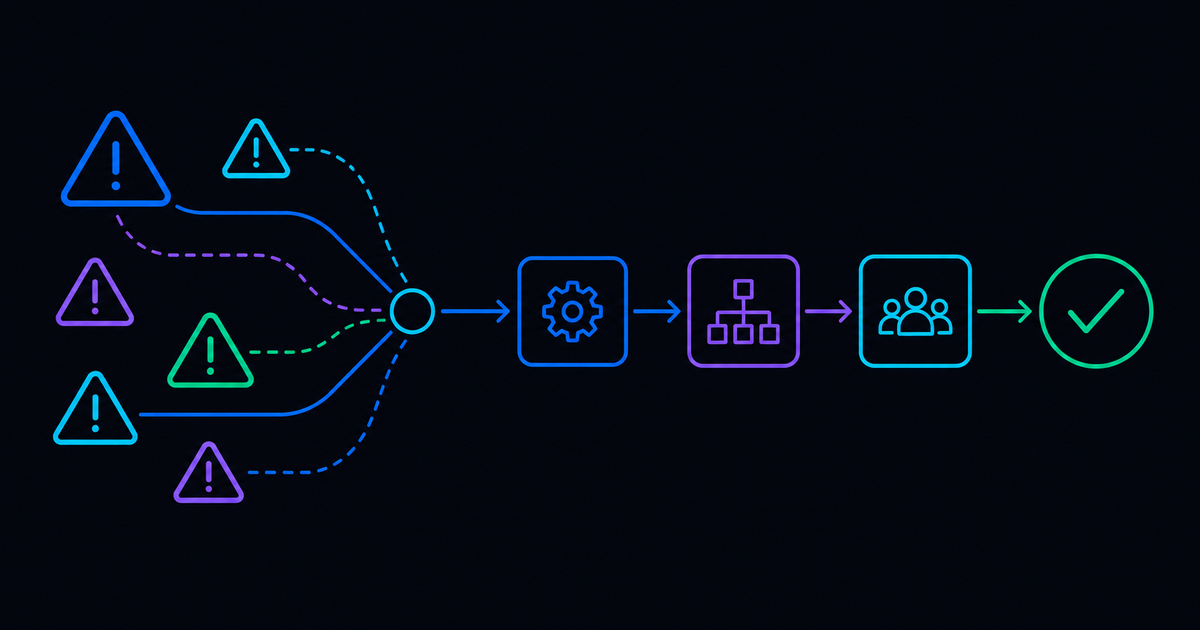


At a Glance
- Effective enterprise ITSM begins with shared service definitions, priorities, risk classifications, and escalation standards.
- Clear ownership keeps services and processes accountable across teams, systems, and business units.
- Incident, problem, change, asset, and request management require consistent processes that reflect business impact.
- Automation should execute governed work while keeping the ITSM platform current as the system of record.
- Mature teams measure service outcomes and review important processes regularly rather than treating ITSM as a one-time implementation.
What Are ITSM Best Practices?
ITSM best practices are standardized ways to design, operate, measure, and improve IT services. For enterprise teams, the most important practices are clear service ownership, consistent incident and problem management, risk-based change controls, trustworthy configuration data, standardized request fulfillment, outcome-based metrics, governed automation, and continual improvement.
This guide explains the most important ITSM best practices for enterprise IT teams, how they apply across incident, problem, change, configuration, and request management, and where automation and orchestration fit into mature service management. It also covers common pitfalls, core metrics, and how Resolve supports governed ITSM automation.
What Are The Most Important Enterprise ITSM Best Practices?
1. Define Common Service, Priority, Risk, and Escalation Standards
Use shared definitions across teams and regions to ensure consistent decisions, reporting, and governance.
2. Assign One Accountable Owner to Every Service and Process
Give each service and process a designated owner responsible for its performance, controls, documentation, and improvement.
3. Prioritize Incidents by Business Impact and Urgency
Use a consistent impact-and-urgency matrix to direct resources toward the incidents that pose the greatest business risk.
4. Use Problem Management to Eliminate Recurring Causes
Analyze incident trends, document known errors, and address root causes to prevent repeated service disruptions.
5. Apply Risk-Based Approvals and Validation to Changes
Match approval, testing, validation, and rollback requirements to the risk associated with each change.
6. Maintain Accurate Asset, Dependency, and Configuration Data
Keep operationally important configuration data current so teams can assess impact, diagnose incidents, and make safer changes.
7. Standardize Common Requests Through a Governed Service Catalog
Define clear eligibility, approvals, fulfillment steps, ownership, and service expectations for frequently requested services.
8. Keep the ITSM Platform as the System of Record for Automated Work
Record automated actions, approvals, results, and exceptions in the ITSM platform to preserve visibility and auditability.
9. Measure Service Outcomes, Not Just Ticket Activity
Track restoration time, recurrence, availability, user effort, and business impact alongside traditional ticket metrics.
10. Review and Improve High-Volume and High-Risk Processes Quarterly
Use performance data, exceptions, and feedback to refine important workflows, controls, documentation, and automation every quarter.
The Core ITSM Metrics & Benchmarks
Following these core ITSM metrics and benchmarks help make IT work predictable, visible, and improvable across the organization.
What “Enterprise” Adds to ITSM Best Practice
Enterprise ITSM applies the same fundamentals across more services, teams, dependencies, regulatory obligations, and change.
Scale and Complexity
Large organizations need shared definitions that work across regions and business units. A priority model, service taxonomy, or change category that means something different to each team cannot support reliable reporting or automation. Global standards should define the minimum required process while allowing controlled local variation where services or regulations demand it.
Governance and Compliance
Enterprise processes often touch privileged access, regulated data, production infrastructure, and formal audit requirements. Roles, approvals, segregation of duties, retention rules, and evidence collection should be designed into workflows. Governance is easier to maintain when the process creates its own audit trail instead of asking teams to reconstruct one later.
Cross-Team Coordination
Enterprise services rarely belong to one technical group. Incidents, changes, and requests may cross service desk, infrastructure, network, security, application, and vendor teams. Mature practice defines end-to-end ownership, handoff requirements, and escalation authority so accountability does not disappear between queues.
Where Automation and Orchestration Fit Into Mature ITSM Practice
Automation should reinforce ITSM controls, not bypass them. A governed workflow can gather context, execute approved steps, request human authorization, validate the result, and write the outcome back to the ITSM system of record. Orchestration coordinates that work across systems while the ITSM platform continues to manage tickets, SLAs, approvals, and reporting.
That separation is important. For the fuller architectural argument, see Why Your ITSM Is Not Your Orchestration Platform.
Choosing IT Management Solutions That Support ITSM Best Practice
IT management solutions should integrate with the existing system of record, preserve approval and audit requirements, and avoid creating shadow processes. Evaluate whether a solution keeps ticket data current, supports role-based access, exposes failures clearly, and coordinates work across the systems involved in delivering the service.
Do not judge fit from a polished happy-path demo alone. Test real cross-system workflows, exceptions, governance controls, scale, and recovery from failed steps. Resolve’s 10-criteria service desk automation evaluation framework provides the deeper checklist.
Common Pitfalls in Enterprise ITSM Practice
Treating ITSM as Ticket Administration
Routing, categorization, and SLA clocks matter, but they are not the outcome. The discipline exists to restore, deliver, and improve services. Teams should measure service health, resolution quality, recurrence, user effort, and business impact alongside queue activity.
Automating in Silos
Local scripts and disconnected workflows may improve one team’s speed while weakening governance. Different triggers, approvals, data, and audit methods make enterprise practice harder to trust. Reusable, governed patterns create more value than isolated wins.
Neglecting Continual Improvement
Processes drift as services, teams, and risks change. Review recurring incidents, failed changes, aging requests, SLA exceptions, and automation failures on a defined cadence. Assign improvement owners and measure whether changes actually reduce friction or risk. Tool upgrades cannot replace this operating habit.
Build the Practice Before Scaling the Tooling
Enterprise ITSM best practice is a management discipline, not a feature checklist. The strongest programs standardize essential processes, make ownership visible, maintain trustworthy operational data, and review performance continuously.
Automation is now part of that discipline. When orchestration extends governance instead of working around it, teams can execute established processes faster without sacrificing control.
How Resolve Supports Enterprise ITSM Best Practice
Resolve adds a governed automation and orchestration layer to the ITSM, monitoring, infrastructure, network, cloud, and identity tools an enterprise already uses. Signals can trigger diagnostics, remediation, fulfillment, approvals, verification, documentation, and escalation without displacing the ITSM platform as the system of record.
This model extends established governance into cross-domain execution. Teams retain their ticket history, SLAs, change controls, permissions, and audit trails while reducing the manual work required to move from request or incident to a verified outcome.
Explore Resolve’s ITSM automation solution to see how enterprise IT teams can connect tickets and signals to governed, cross-system resolution.
Frequently Asked Questions
What are the most important ITSM best practices?
Start with consistent incident, problem, change, asset and configuration, and request-management processes. Define ownership, risk paths, escalation, documentation, measurement, and a regular review cycle for each.
How often should enterprise ITSM processes be reviewed?
Review high-volume and high-risk processes at least quarterly, with additional reviews after major incidents, failed changes, audits, service launches, or meaningful organizational changes.
Does automation replace an ITSM platform?
No. Automation and orchestration should execute and coordinate work while an ITSM platform becomes the system of record for tickets, SLAs, approvals, and reporting.
How should teams measure ITSM maturity?
Measure outcomes such as MTTR, recurrence, change failure rate, request completion time, self-service success, data accuracy, user satisfaction, and continual-improvement completion.

.png)
.png)